In the academic environment, particular attention is paid to the quality of peer review of scientific articles, which is intended to ensure their scientific reliability before publication. At the same time, situations do occur in which reviewers fail to identify all errors or controversial aspects of a study at this stage. As a result, after an article has been published, it may become necessary to withdraw it through a retraction. What does this procedure involve, how is it carried out, and for what reasons may an article be retracted? Read more about this in our article.
What is a scientific article retraction and who can initiate it?
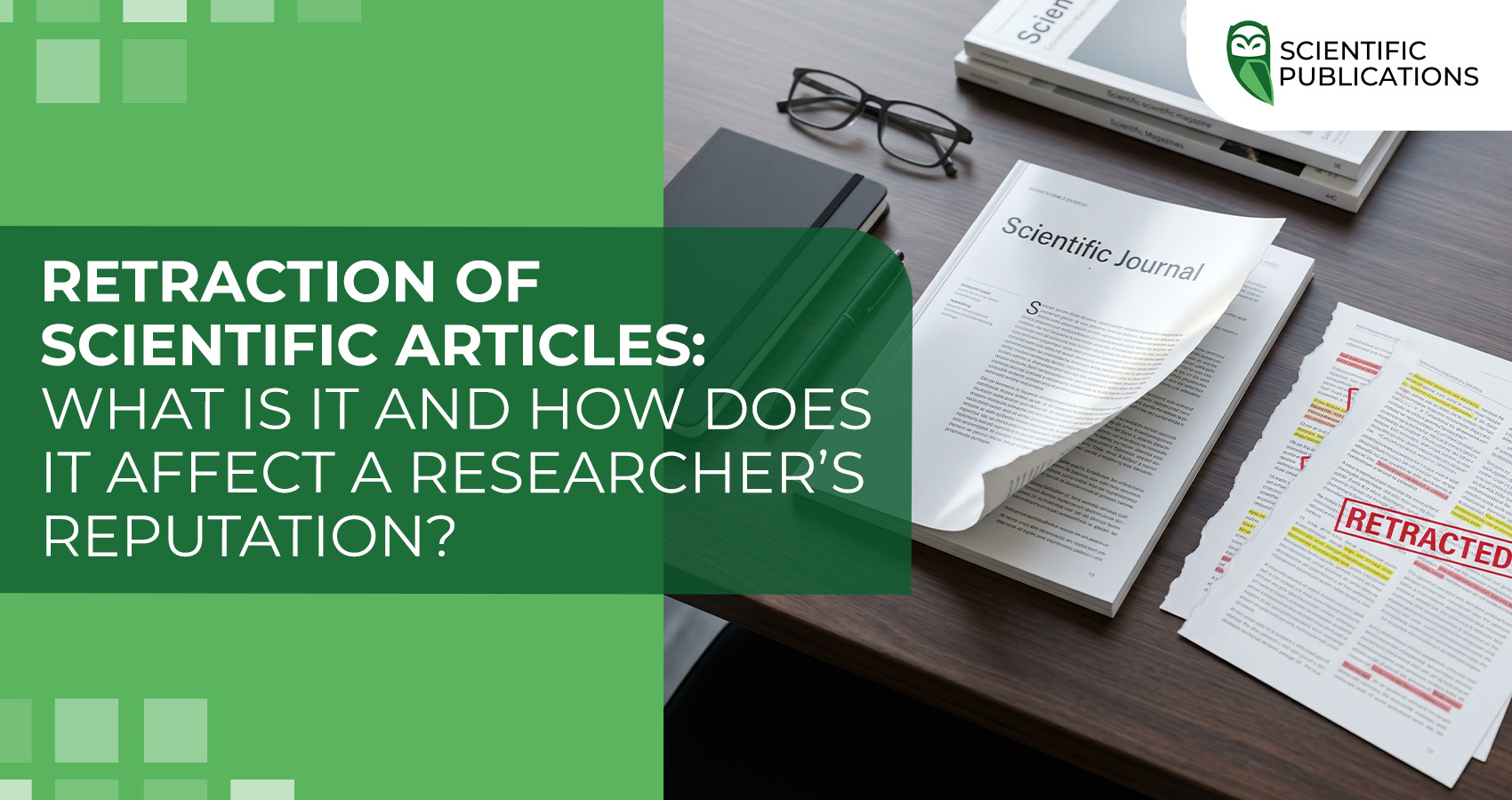
A scientific article retraction – is a mechanism within the publication sphere that involves the official withdrawal of an already published scientific work due to the unreliability of its results or violations of academic integrity.
In general, there are two main types of retractions in scientific journals: author-initiated retractions and editor-initiated retractions.
An author-initiated retraction occurs when the author of an article identifies significant errors or inaccuracies in the published research or independently acknowledges the unreliability of its results. In such situations, the researcher may initiate the procedure for withdrawing the article from the scientific journal.
This procedure takes place if the author:
- identifies an error in calculations or methodology
- discovers a problem with the data (for example, an incorrect sample or a technical error)
- realises that the conclusions are not supported by repeated analysis
- obtains new data that refute the previous results
- identifies violations that were committed unintentionally (for example, incorrect data processing)
In contrast, an editor-initiated retraction involves the withdrawal of an article at the initiative of the editorial team of a scientific journal. This is possible when plagiarism, data falsification, ethical violations, or other forms of misconduct have been identified in the scientific work.
COPE retraction policy: key aspects
Each scientific journal or publisher has its own policies and procedural features regarding article withdrawals, which are based on generally accepted international standards of academic integrity. The policy developed by the Committee on Publication Ethics (COPE) is considered the so-called “gold standard”.
COPE’s key approach is that retraction is viewed not as a punishment for the author but as a mechanism for correcting the scholarly record and ensuring its reliability. The main purpose of this procedure is to preserve the integrity of the scientific publication and prevent the use of unreliable data in future research.
Among the fundamental principles of the COPE policy are the following:
- retraction is applied when research results are unreliable due to errors or misconduct
- the decision to retract must be transparent, justified, and supported by documented evidence
- the retraction notice must be clearly linked to the original article and remain part of the scholarly record
- the original article is not removed entirely but is marked as retracted (that is, withdrawn)
- the purpose of retraction is not to conceal a problematic publication but to inform the scientific community of its status
Importantly, COPE emphasises the need to distinguish between honest errors and cases of intentional misconduct. This influences the form of the final decision; however, in all cases, the principle of transparency remains paramount.
What does the retraction of an article mean for a researcher?
The retraction of a scientific article is a serious procedure for a researcher; however, its consequences may vary depending on the reasons for the withdrawal.
In cases of honest errors, retraction (usually an author-initiated retraction) is often regarded as a responsible step taken by the author to correct scientific information. In such situations, it may even demonstrate adherence to the principles of academic integrity and scientific responsibility.
At the same time, if a retraction is associated with violations of ethical standards, such as plagiarism, data falsification, or manipulation of results, it may have serious consequences for the author's academic reputation. These may include:
- reduced trust in future publications
- an impact on collaboration with other scientific institutions
- scrutiny of previous works for potential violations
- possible restrictions imposed by journals or publishers
At the same time, it is important to understand that retraction does not automatically mean a researcher's “exclusion” from the scientific community. In the modern academic system, it is regarded as a tool for correcting scientific knowledge rather than a final assessment of a researcher's entire career.
Thus, retraction performs a dual function: on the one hand, it helps uphold the principles of academic integrity, and on the other, it enables journals to correct their own mistakes and maintain confidence in published results.
To ensure that your publication process proceeds successfully and without unnecessary difficulties, contact Scientific Publications. Our specialists will help you select a reliable scientific journal, prepare your article in accordance with its requirements, and support you throughout all stages of the process until indexing. Would you like to receive a free consultation? Then complete the form below, and one of our managers will contact you as soon as possible. Together towards new scientific achievements!