Social media has become an integral part of not only everyday life, but has also had a significant impact on an important field like science. Today, let's talk about the top 5 best social media platforms for scientists that will be useful for expanding scientific connections and improving career prospects.
7 reasons to use social media for scientists
Specialized social platforms can be an indispensable tool for advancing research if you know how to use them effectively. Seven key reasons why scientists should sign up for social media:
-
Social platforms make it quick and easy to share research findings with a wide academic audience
-
the opportunity to network with colleagues from different countries, which can lead to international collaborations, joint projects and exchange of experience
-
search for sponsors to fund research projects
-
Opportunity to promote your personal brand, thereby increasing the reach and citations of your articles
-
Access to alternative funding opportunities and grants in various fields of science
-
Opportunity to receive feedback from colleagues and prior peer review
-
Regular scientific blogging, active participation in discussions and publications contribute to a scientist's reputation.
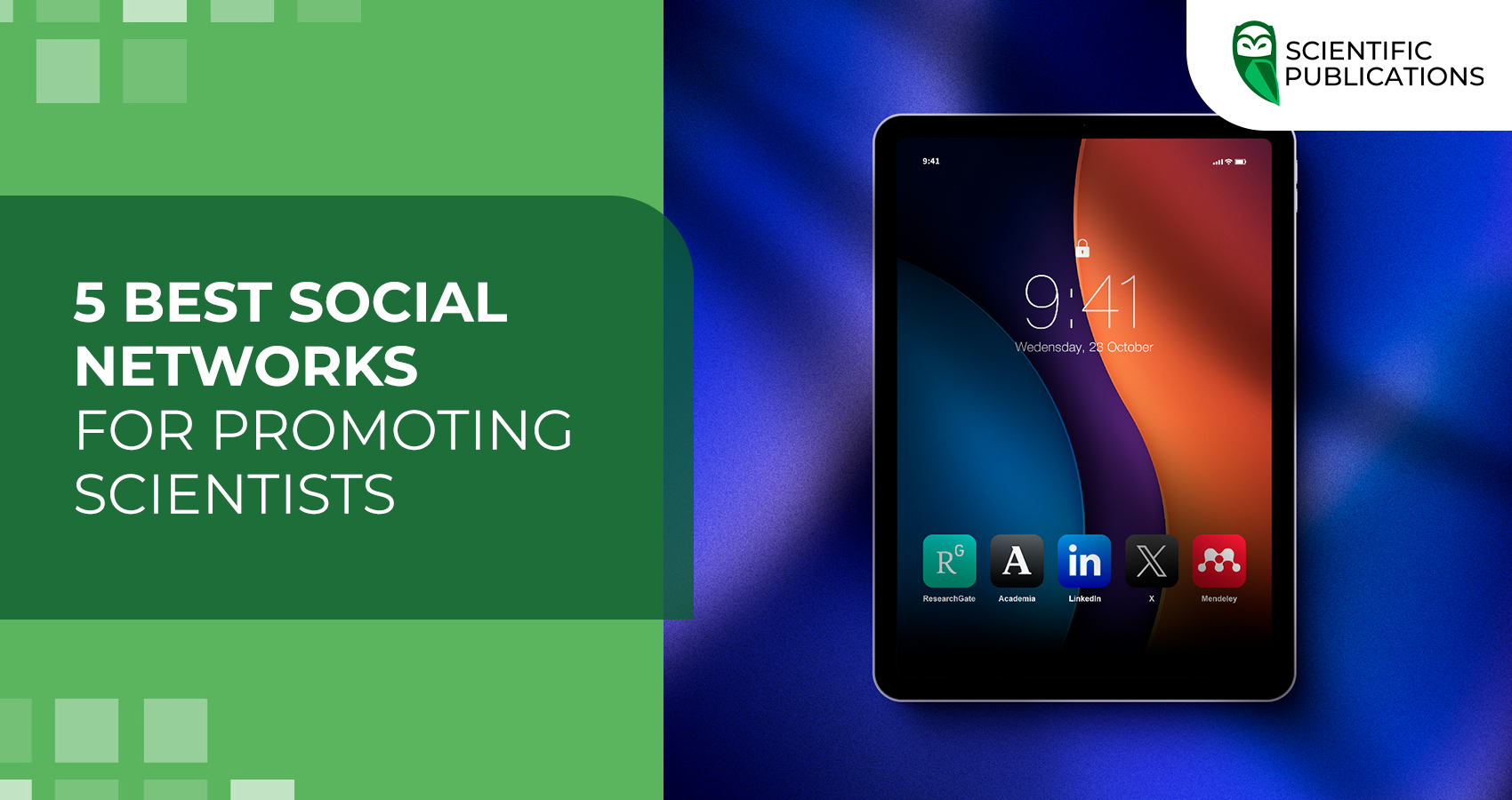
5 best social platforms for researchers:
-
ResearchGate
ResearchGate is the leading social network for scientists, connecting more than 25 million researchers from around the world. The platform is very popular among scientists due to its ability to publish scientific articles, exchange opinions with colleagues and participate in topical discussions. Millions of researchers around the world choose ResearchGate to stay up-to-date with the latest science news.
Benefits:
-
The ability to freely publish articles and get feedback on your work
-
If your goal is to find funding and collaborations, this social network is for you.
-
free access to the full functionality of the platform (you only need to specify your affiliation when registering)
-
social network facilitates the search for co-authors and partners for international collaborations
-
broad academic audience - more than 25 million researchers from 193 countries of the world
-
user-friendly interface
-
availability of tools for tracking citations.
-
Academia.edu
Academia.edu is one of the largest (over 114 million accounts) specialized platforms for sharing scientific knowledge. A special feature of the social network is support for search engine optimization (SEO), which makes scholarly articles accessible through major search engines such as Google.
Advantages:
-
search by research interests
-
easy publication of research papers
-
tools to track views and downloads of scientific papers
-
The social network helps increase the visibility of scientific papers through its large user base of researchers from around the world.
-
LinkedIn
LinkedIn is a professional social network that has become an indispensable tool for business networking, job search and career advancement in various fields, including science. For scientists, LinkedIn opens up many opportunities, helping to develop scientific connections, share achievements and find partners for cooperation.
Benefits:
-
A powerful tool for building collaborations, finding partners for joint projects and co-authors for writing scientific articles
-
The platform actively publishes job vacancies and grants in the academic field
-
LinkedIn gives academics the opportunity to share their academic achievements and research results, allowing them to build a personal brand.
-
Twitter (X)
While Twitter (X) may not immediately be associated with science, the platform has become an important space for sharing scientific ideas, research findings, and publications. Twitter (X) is an incredibly powerful professional communication tool that can be used to promote scientific papers, communicate with colleagues, or find up-to-date news in a variety of subject areas.
Benefits:
-
Special hashtags for academics and researchers can be used to find discussions on a wide range of scientific topics and share their research (#AcademicTwitter, #PhDChat, #ScienceTwitter, #Research)
-
the platform brings together a large academic community
-
The social network allows you to stay up-to-date on the latest science news and maintain a dialog with scientists from around the globe.
-
Mendeley
Mendeley is not only a social network for scientists, but also a powerful tool for managing scientific literature. It allows you to organize your own library, share articles with colleagues, as well as participate in discussions and find new research.
Advantages:
-
Ability to store and organize bibliographic data
-
tools for collaborative work on scientific projects
-
interest groups to discuss research in different areas of science.
Presence in social networks is only one way to promote the scientific activity of a scientist. Other effective methods of increasing the authority of research and increasing its indicators are publications in the global databases Scopus and Web of Science, as well as increasing the Hirsch index. These services are presented on our site, you can familiarize yourself with them in the section "Services". For a free consultation with our specialist, please leave your contact details in the form below.