Many researchers experience delays with publications due to a lack of a clear strategy. They often fail to systematise their research activity in any way, which, in turn, leads to a disruption of their dissertation defence or grant application. Researchers can avoid such chaos and optimise their work with the help of a publication plan. However, creating one is only half the job. It is crucial to be able to implement it competently, meet the deadlines set, and monitor your progress. How can this be done?
What is a publication plan?
The concept of a "publication plan" is unfamiliar to many researchers, although in fact it is quite an effective tool for systematic scholarly activity.
So, a publication plan – is a structured document for planning research activity that enables a researcher to determine in advance how many articles, in which journals, and within what timeframes need to be published in order to meet the requirements of attestation, dissertation defence, or a grant report.
There are numerous formats for a publication plan, since every researcher can structure all the necessary information in whatever form they choose. For instance, one of the most widespread is a table. Besides this, researchers also actively use other formats, in particular:
- a kanban board (a visual format with columns representing stages)
- a roadmap (a chronological timeline with articles distributed across months or quarters)
- a combined format (a table combined with visual status marking, for example by colour)
Why is it important to periodically update and monitor the implementation of a publication plan?
As we noted above, it is not enough merely to create a publication plan, since this does not yet guarantee its implementation. Regardless of the format chosen, the plan remains merely a tool. Its effectiveness depends on how regularly the researcher reviews it and adapts it to real changes in the process of preparing and submitting articles.
Regular monitoring helps to identify deviations from the planned schedule in a timely manner. For example, preparing a manuscript may take longer than expected, a co-author may delay their part of the work, or the review process may take longer than planned. If such changes are not taken into account, even a plan drawn up well at the beginning of the year gradually loses its relevance.
Moreover, periodically reviewing the publication plan makes it possible to assess not only the number of tasks completed, but also how well the results obtained correspond to the original goals. It is important to check which articles have already been published, which are at the stage of review or revision, and which still require preparation. Separately, it is worth monitoring the planned journals, their current indexation, and their compliance with the requirements of the specific research.
Monitoring the implementation of a publication plan: practical advice
Establish a clear frequency for review
In order to make changes to a publication plan, it needs to be periodically monitored. That is precisely why you should determine a fixed frequency for reviewing it (for example, once a month or once a quarter) and set reminders in your calendar. In this way, you will be able to systematically track deviations from the plan and make timely corrections.
Use tracking tools
Records kept in scattered notes easily lead to the loss of important details. It is therefore worth choosing a convenient tool for maintaining the plan, for example, a table in Excel or Google Sheets, a Kanban board in Trello or Notion, or specialised services such as Asana for co-authorship work. The main thing is for the tool to allow you to see the status of each article at a glance, without needing to leaf through separate sheets or files.
Maintain a clear status for each item in the plan
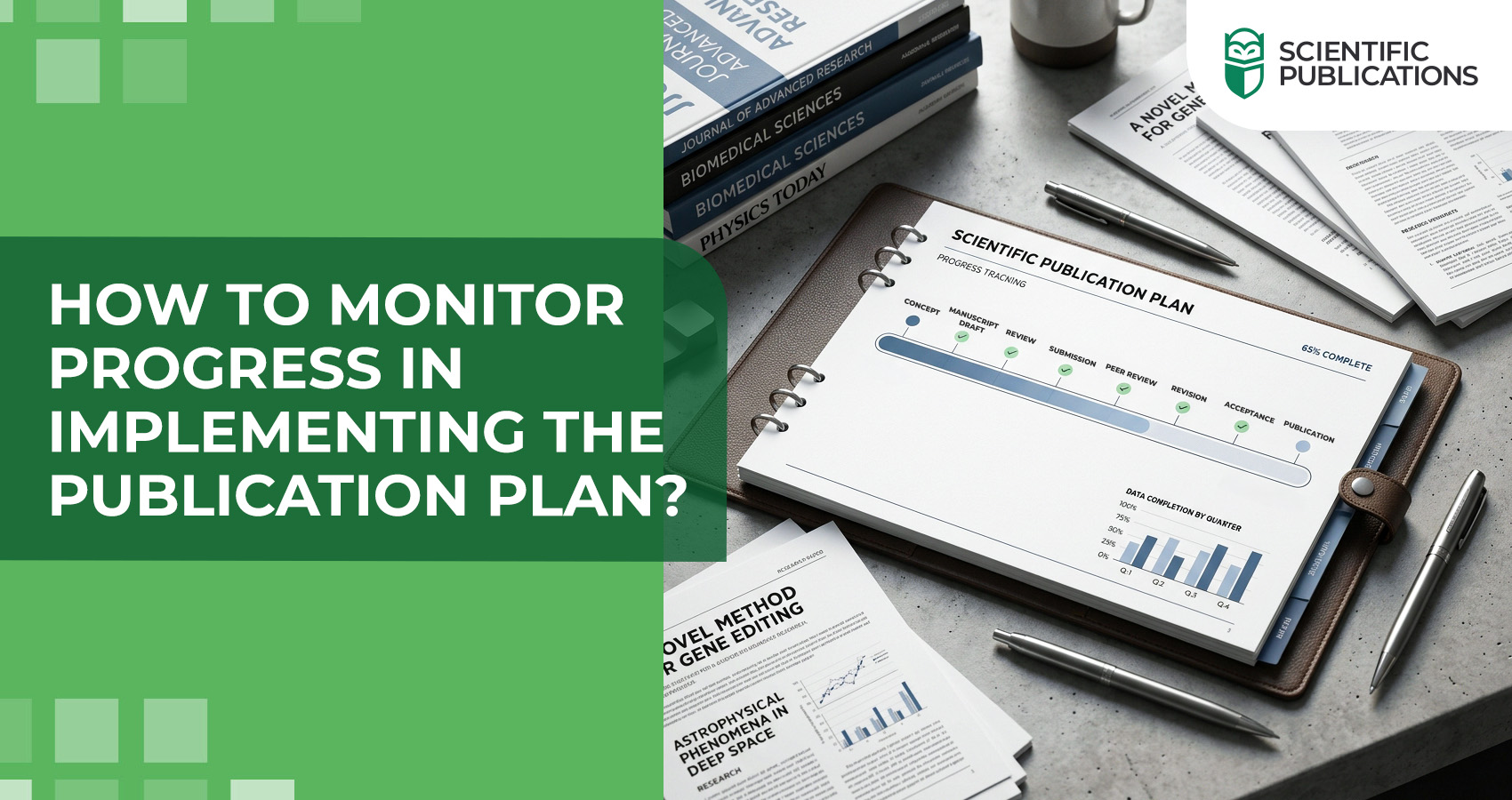
A publication plan usually describes the various stages of work on writing and submitting an article. Tracking the current state of each of these stages can be significantly streamlined with the help of different statuses: idea / in progress draft ready submitted under review requires revision accepted / published rejected (and where you plan to submit the article next)
Analyse the reasons for deviations and delays
To avoid delays in future, it is worth analysing the reasons for the rejection of articles (if such cases have occurred). Record a detailed description of the reason directly in the table or on the article's card. This will make it possible to spot recurring mistakes and adjust your approach to journal selection or manuscript preparation in future publications.
Adjust priorities, not just deadlines
There are cases when, during the implementation of a publication plan, the priority of tasks changes. This is entirely normal, since if you have the opportunity to submit an article to a journal's special issue with a limited deadline, it may become a higher priority than a previously planned publication with no strict time constraints.
As can be seen, the effectiveness of a publication plan depends directly on the researcher's approach to its implementation. If a researcher systematically checks the status of all articles and the stages of their submission, and also adapts the plan in a timely manner in accordance with real circumstances, they have significantly greater chances of completing the tasks set within the specified timeframes.
If you have encountered difficulties in creating a publication plan and need professional support, contact the Scientific Publications company. Our specialists will help you competently build a publication strategy, and will also support you at every stage of the working process. To receive a free consultation, fill in the form below, and our manager will contact you shortly. Together towards new scientific achievements!