Scientific co-authorship is an integral part of modern academic activity. In the context of globalization of science and development of interdisciplinary research, scientific collaboration becomes a key factor for achieving significant and innovative results. However, co-authorship is associated with a number of ethical, organizational and practical aspects that are important for every researcher to consider.

Key principles of scientific co-authorship
The key principles of scientific co-authorship are the basis for a fair and transparent distribution of merit in scientific publications. Each author is responsible for a fair and objective assessment of his/her own contribution to the project as well as the contributions of co-authors. Observance of these principles is necessary for correct indication of authorship in accordance with established standards in all publications where they are listed as authors.
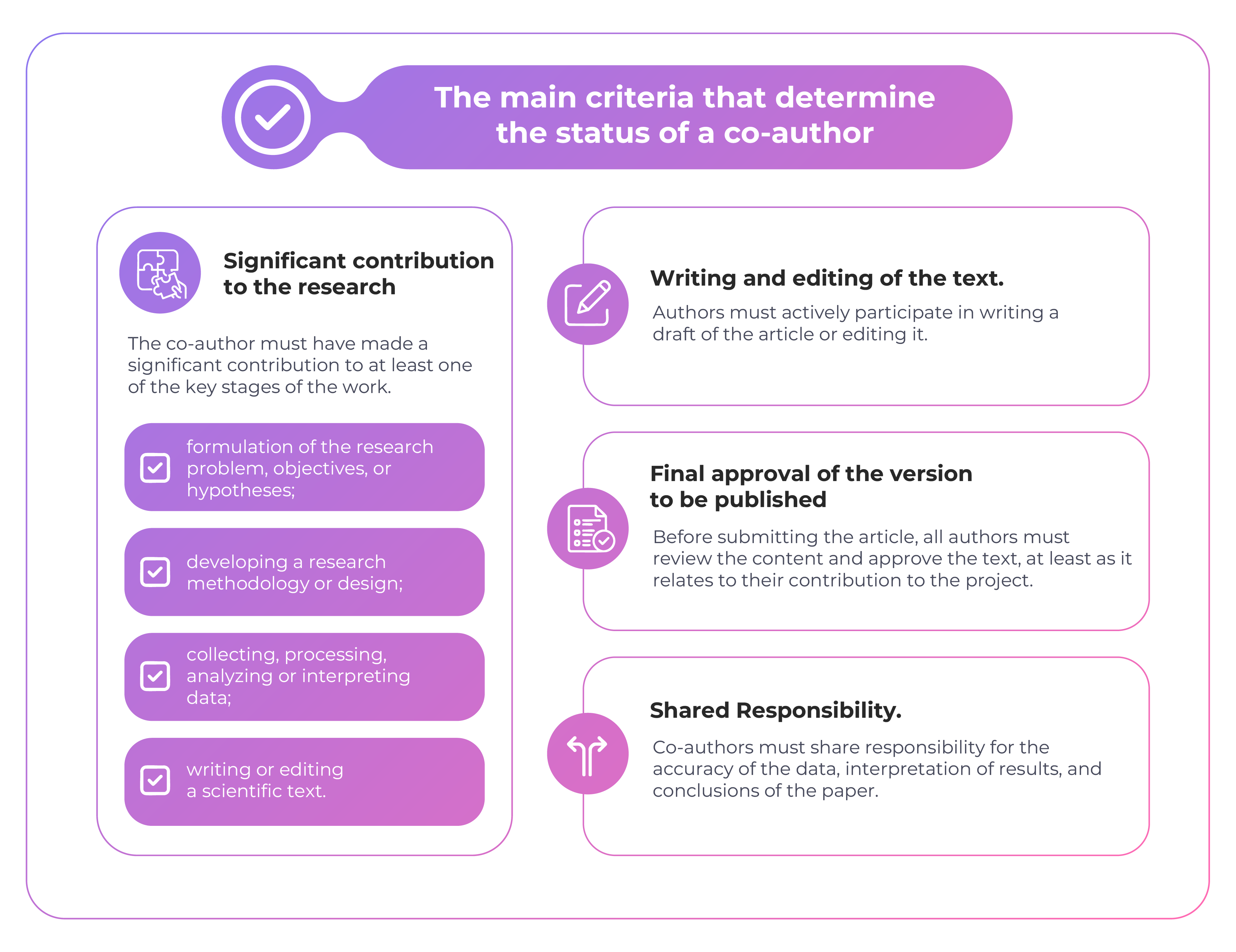
According to international standards, a person who has made a significant contribution to one or more stages of the research can be considered a co-author of a scientific paper:
- conceptualization and design of the study
- Collecting, analyzing, or interpreting data
- writing or substantially editing the text of the article.
Who can be considered a co-author?
The ethics of scientific co-authorship
The ethics of scientific co-authorship play a key role in ensuring the transparency, fairness and credibility of scientific data. Adherence to ethical standards on co-authorship builds trust in the scientific community and protects the intellectual rights of everyone involved in the research.
According to Elsevier policy, the following types of co-authorship are considered unacceptable:
- ghost co-authorship: this is a phenomenon in which professional authors who make real contributions to a scientific article (e.g., data collection, analysis, writing) are not listed as authors of the article. Ghost authorship is usually associated with commercial interests, where experienced experts or professional researchers (most often paid by outside organizations such as pharmaceutical companies) create scientific publications on behalf of other scientists
- guest authorship: the inclusion of experienced scientists who were not involved in the work as co-authors to increase the prestige of the publication and increase the chances of acceptance of the article
- "gift" authorship: a type of dishonest authorship in which a mentor or supervisor is listed as a co-author even though he or she has not made a significant contribution.
- authorship for money: an attempt to acquire authorship in an article for money (especially after the article has been peer-reviewed or previously accepted). This is a clear violation of ethics and scientific values, as it violates the principle of honesty and fairness in scientific publishing
- anonymous authorship: publishing a paper anonymously can cause several serious problems, such as lack of accountability for published research results, difficulties with fact-checking and citation, deterioration in the quality of peer review, and uncertainty about the author's contribution.
Who cannot be considered a co-author?
- "Honorary" authors. People whose names are added to a publication without real contribution (e.g., project managers or administrators) should not be listed as co-authors.
- Technical contributors.People who performed only technical tasks (typing, design of tables or graphs) cannot be co-authors. Their contributions may be mentioned in the acknowledgements section.
- Sponsors. Individuals or organizations that provided funding but did not participate in the research work cannot be listed as co-authors.
- Consultants and critics. Persons who provided general advice on a research paper without making a direct contribution to the research may be listed in the acknowledgements but not among the authors.
Conflicts in co-authorship
The key principles governing co-authorship may vary by discipline, research project, and other factors. However, there are general principles that are important to keep in mind in order to avoid disputes over authorship and to be prepared to resolve them if they arise:
- following the journal's requirements for co-authored publications as well as the standards established in your field of expertise
- assigning responsibilities to everyone involved in the project
- discussing roles at an early stage of writing a research paper
- Use of a written collaborative agreement.
- Involvement of a third party (e.g., project manager or external expert) to resolve disagreements.
Scientific Publications cooperates with scientists all over the world, providing support in publishing co-authored scientific articles in prestigious journals. For more than 8 years, we have been providing article placement services in Scopus and Web of Science databases, guaranteeing successful indexing of your scientific papers. For more information about co-authored publication, leave your contact details in the form below. Our manager will contact you within a working day.