Publication in a scientific journal is a complex and multi-stage process that requires significant time investment. For many researchers, the rapid dissemination of research results is critically important, since timely submission of necessary publications for dissertation defence or grant application may depend on it. To effectively plan publication activities, it is essential to clearly understand the stages of this process and the factors that affect its duration. In this article, we will examine in detail the key stages a manuscript goes through from preparation to indexing, as well as analyse the main factors that determine the speed of publication.
Key stages of publication in a scientific journal
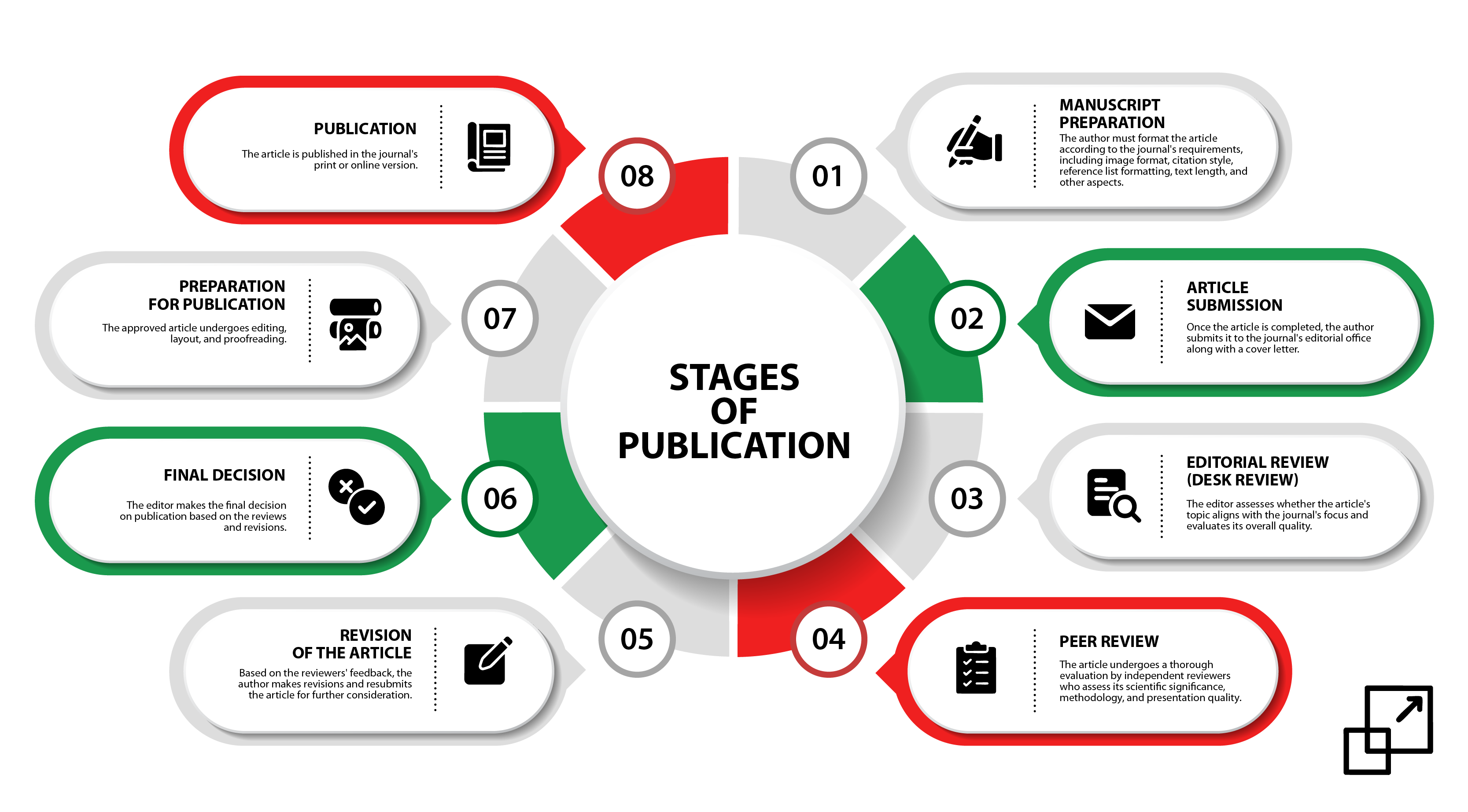
Before considering the factors that influence the speed of publication, it is necessary to define the key stages of this process.
Usually, the path of a manuscript from preparation to publication includes several important stages, each with its own features and requirements. Understanding these stages helps researchers effectively plan their work and avoid delays. Below are the main stages of the publication process:
 Factors influencing the duration of publication
The duration of the publication process in a scientific journal depends on many factors that can either accelerate or delay this process. Understanding these factors allows researchers to better plan their work and optimise the time required for dissemination of research.
1. Prestige of the journal
It should be noted that the authority of the journal directly affects the complexity and duration of the publication process. Prestigious journals indexed in international databases such as Scopus or Web of Science impose much stricter requirements on authors. This applies both to the content of the article and to its compliance with strict formatting standards.
Due to high competition and thorough peer review, which requires detailed analysis of many aspects, this stage in such journals can last more than six months. Understanding these features helps authors better assess time costs and effectively plan their publication activities.
2. Workload of the journal
This aspect is a logical continuation of the previous one. If you submit an article to a prestigious journal, be prepared that the process will take considerable time. This is related not only to lengthy peer review but also to waiting in the publication queue.
Thanks to the high reputation of such journals, many researchers strive to publish their work there, which leads to numerous submitted manuscripts. Even if your article is accepted, additional time may be needed before it appears in the printed or online version of the journal.
3. Quality of the article
One of the key factors influencing the speed of publication is the level of preparation of your article. At the review stage, the manuscript may be returned for revision due to errors, inaccuracies, or non-compliance with the journal's requirements. The more corrections need to be made, the longer the publication process will last.
To avoid such delays, carefully proofread the article before submitting it to the editorial office. Ensure that it complies with the IMRAD structure, citations are properly formatted, and the scientific novelty of the research is clearly presented.
4. Number of reviewers
It is worth noting that the number of specialists involved in reviewing varies depending on the journal. Due to the limited number of qualified reviewers in some editorial offices, the manuscript evaluation process may be significantly delayed, which affects the overall duration of publication.
5. Frequency of issues
The frequency of issues is another important factor that influences the duration of the publication process. Before submitting an article to a scientific journal, it is advisable to find out how often it publishes issues. Some journals are published monthly, others quarterly, semi-annually, or even once a year.
This frequency directly determines how long you will have to wait for your article to be published after it has been approved.
6. Communication
Throughout the publication process, the author must constantly communicate with the journal's editorial office. This communication is not always effective and quick, as there are cases when a researcher or a representative of the scientific journal may lose a letter or respond to messages with delays. This, in turn, may extend the publication process for some time.
Publication in scientific journals requires considerable resources and time. There are many factors that influence the speed of this process. In order to properly plan your activities, it is extremely important to take them into account at the early stages of work.
The company Scientific Publications guarantees publication in scientific journals. Our specialists will audit your article, help select a journal, conduct business communication with editorial representatives, and accompany you at all stages of the work. To receive a free consultation, fill out the form below, and our manager will contact you shortly. Together towards new scientific achievements!