Co-authored research publishing has become a common practice in academia over the past few years. This trend can be seen in many fields of knowledge, from natural sciences and mathematics to social sciences and humanities. Collaboration of scientists and writing joint publications have many advantages that have a positive impact both on the quality of scientific papers and on the career development of researchers. The main advantages of co-authored research articles for Bulgarian researchers will be discussed in this article.
What is co-authorship in the academic world?
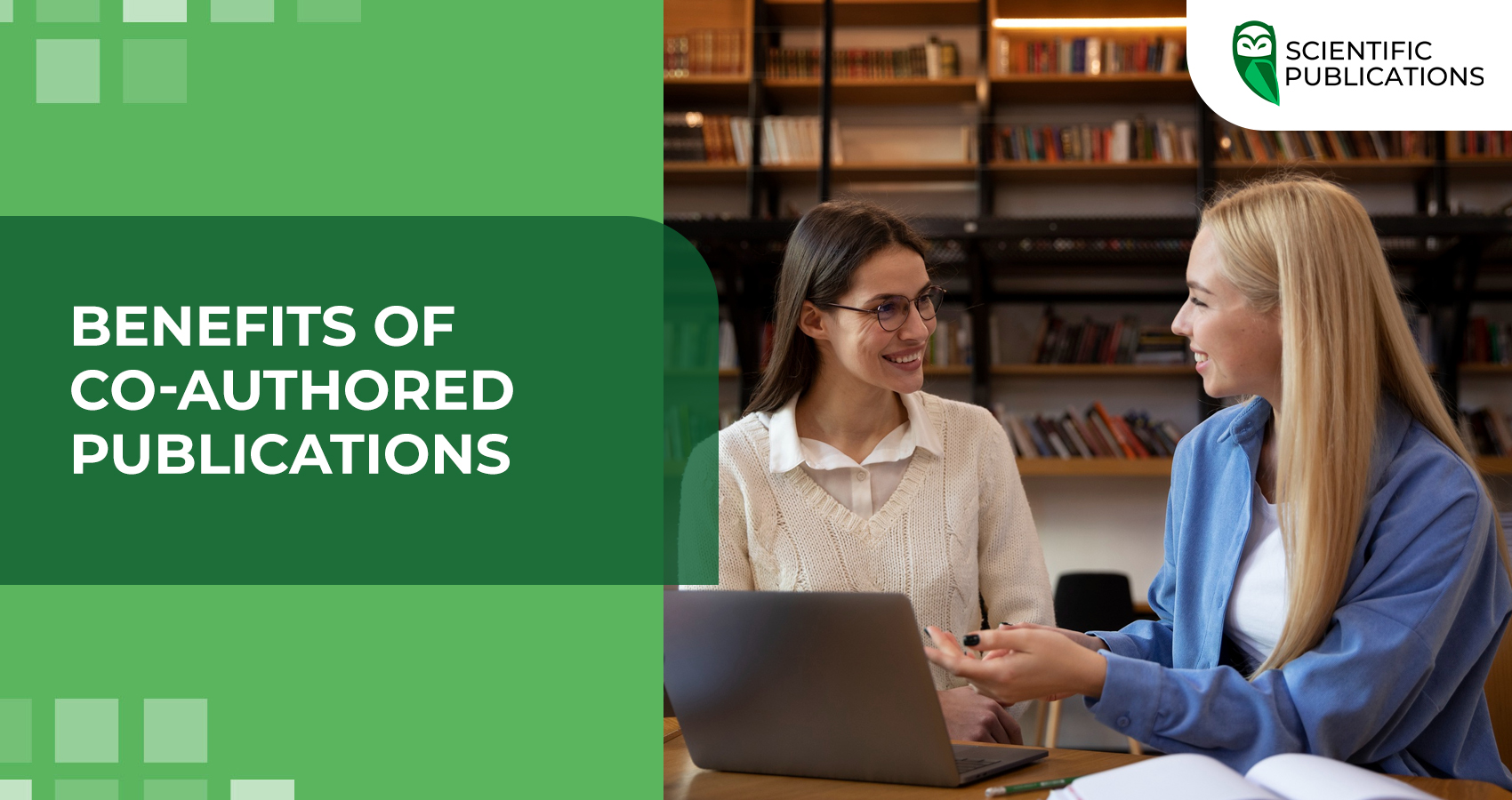
Scientific co-authorship is a type of collaboration in academia between two or more researchers that results in a joint project, study, research paper or other type of interaction. Each of the co-authoring scientists makes a significant contribution to the collaborative work based on the knowledge and expertise they possess. Most often in joint projects, the areas of responsibility are clearly delineated, which allows a fair distribution of authorship of the scientific work.
Advantages of publishing scientific articles in co-authorship:
Combining knowledge and expertise
Co-authored publications bring together the unique expertise of two or more scientists, which can lead to deeper and better research.
For example, in projects involving interdisciplinary research, the participation of researchers from different fields of science allows for more multifaceted and valuable results.
Increased productivity and efficiency
Working on a publication as a team allows tasks to be distributed among co-authors, which simplifies the research and writing process, reducing the burden on everyone involved in the project.
Expansion of scientific relations and networking
Another strong argument in favor of co-authorship. Joint publications facilitate the establishment of professional ties with colleagues from other universities, countries and regions. This is especially important in the context of globalization of science, when international cooperation plays a key role in obtaining funding and recognition of scientific achievements. Thanks to successful experience of co-authored publications, scientists can receive invitations to international conferences and seminars, offers to work in major foreign educational institutions, joint grants, awards and prizes.
Sharing the financial burden
Publication fees in reputable international journals can be high and sometimes unaffordable for a single author. Publishing in the top-rated journals included in Scopus and Web of Science can cost a scientist a large sum, so sharing the financial burden is a reasonable solution.
Increasing citations
Co-authored articles are more likely to be cited in academia because they have a greater reach to a scientific audience. Through the participation of several authors with separate audiences, the scientific work becomes more visible and citable. Articles with high scientometric indicators have a positive impact on the careers of all co-authors.
Advantages of publishing in Scopus and Web of Science in co-authorship
In Bulgaria, as in many other countries, publications in Scopus and Web of Science are a prerequisite for advancement in academic career, obtaining academic titles, scientific degrees, and funding research projects. Co-authorship increases the chances of publication placement in reputable scientific publications, as joint in-depth works (especially disciplinary ones) often interest editors of prestigious journals more than articles written by a single author. Collaboration with experienced scientists helps to meet the high requirements and standards of scientific metrics platforms Scopus and Web of Science and to publish in leading scientific journals.
Regulatory requirements regarding co-authorship for scientists from Bulgaria
For publication in scientific journals indexed in Scopus or Web of Science, a maximum of 5 co-authors is recommended. This is due to the standards and requirements of scientometric databases.
Publication in professional scientific publications in Bulgaria has less stringent requirements. Up to 30 co-authors are allowed for one basic scientific paper. If more than 30 scientists worked on the publication, it is necessary to confirm the significant contribution of each author. This can be done by fulfilling one of the conditions:
- the applicant is listed first in the list of co-authors
- the applicant is listed as a corresponding author
- the scientist's contribution should be confirmed in a letter from the corresponding author or the head of the scientific team.
Scientific results included in joint papers can be divided between co-authors on the basis of their methodological or scientific contribution, which is formalized in the protocol of distribution.
The normative requirements for co-authorship of scientific papers can be found in the Regulation "Pro Conditions and Procedure for Awarding Scientific Degrees and Holding Academic Positions in the Bulgarian Academy of Sciences".
If you need help in posting a co-authored scientific article, the experts at Scientific Publications are ready to help you through all publishing stages. We cooperate with scientists from around the world, specializing in various fields of knowledge, and will select a suitable edition for publication in Scopus or Web of Science database. Still have questions about the publication process? Leave your contact details in the form below and our manager will get back to you within a working day.