Nowadays, co-authorship is becoming a popular and widespread form of collaboration between scientists at both the national and international levels. Today, we will talk about how such collaboration helps the career development of scientists, as well as the development of scientific fields and science in general.
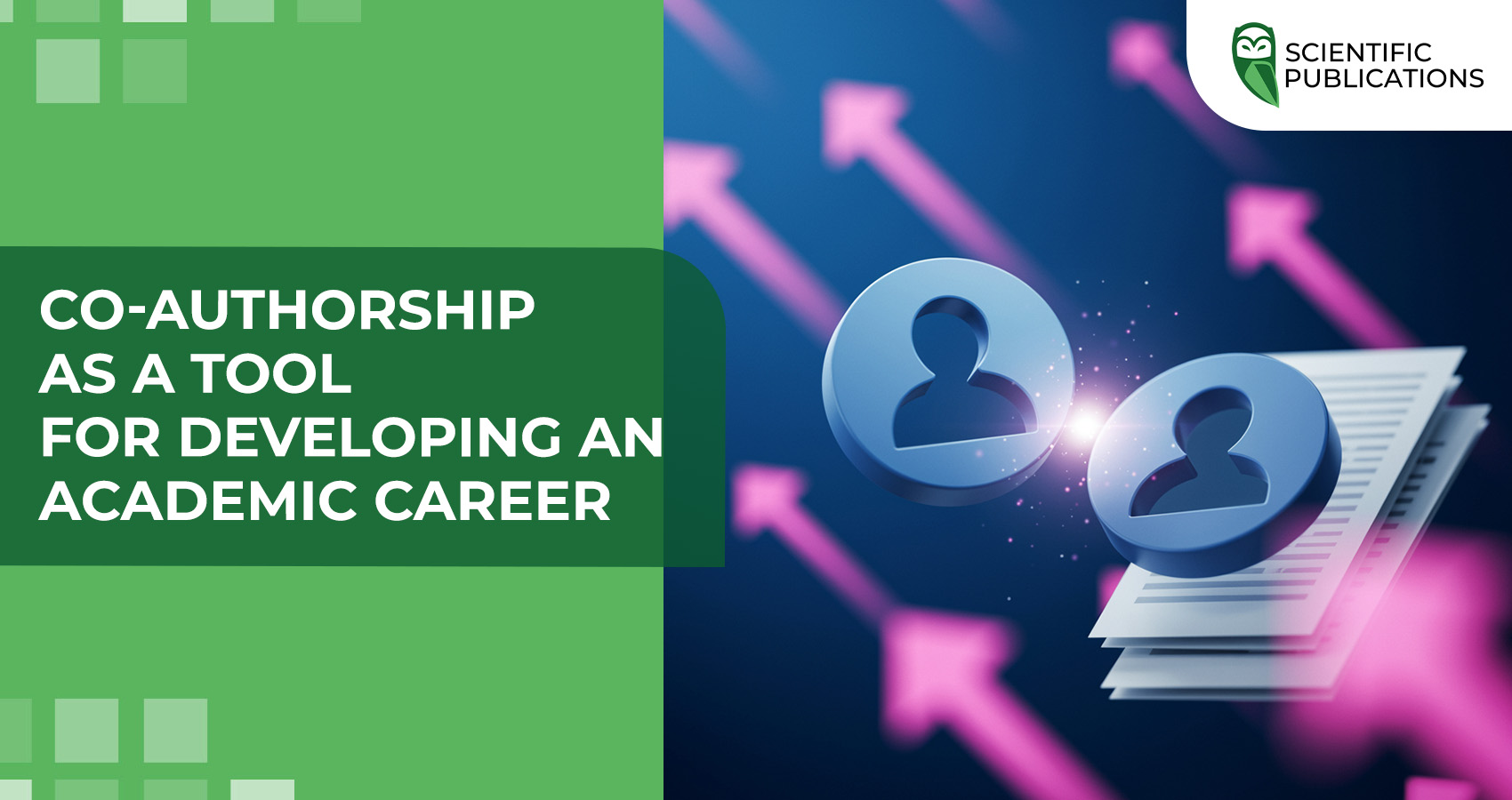
Co-authorship in scientific articles
In the modern scientific environment, co-authorship, which involves the collective work of several researchers on the creation of scientific material, is becoming increasingly popular. This may include joint formulation of a research idea, data collection and analysis, writing and editing the text of a publication. This approach promotes the effective exchange of knowledge and experience and is an important factor in professional growth for both beginners and experienced scientists.
Depending on the distribution of responsibilities among the authors, there are two types of co-authorship: joint, where the contribution of each participant is difficult to clearly define, and separate, which involves a clear delineation of the roles of all members of the research group.
Today, most scientific journals recognise the equal participation of all co-authors, but some publications require the submission of an author's declaration detailing the contribution of each participant to the research.
Distribution of roles in co-authorship
The first author is usually considered to be the researcher who made the greatest contribution to the research and preparation of the publication.
Co-authors are members of the research team whose contribution to the research was significant. The team of authors includes scientists who were actively involved in planning the work, collecting and analysing data, developing the research design, interpreting the results, writing the text or critically reviewing it. It is also important that co-authors agree on the choice of journal for publication and approve the final version of the manuscript. All authors are collectively responsible for the accuracy and quality of the work presented.
Assistants are participants who provide assistance in the research process but do not have sufficient experience for full authorship. Their contribution usually consists of scientific, methodological or technical support, as well as editing or translating the text. Such persons are usually mentioned in the Acknowledgements section, indicating the nature of their assistance. If their contribution was particularly significant, they may be included in the list of authors. At the same time, information about the funding of the assistants' work must be clearly reflected in the accompanying documentation for the research.
How does co-authorship help career development?
- Exchange of experience and knowledge. Collaboration with colleagues allows you to learn about new approaches, methodologies and analytical tools. This is especially useful for young scientists.
- Increase in the number of publications. Participation in co-authored research allows scientists to participate in several projects at the same time. As a result, there are more published articles, an increase in the citation index and an increase in the h-index.
- Expansion of professional connections and contacts. Joint publications with researchers from other institutions, cities or countries form strong professional connections, which often develop into long-term projects or participation in international consortia.
- Opportunities for grants and projects. A team of authors has a better chance of obtaining funding because it demonstrates a multidisciplinary approach, diverse experience, and higher productivity.
- Enhanced scientific reputation. Participation in publications with recognised scientists increases the prestige and authority of the scientist, which has a positive impact on the assessment of their activities in the scientific community.
Co-authorship is not just joint work on an article, but a strategic tool for developing a scientific career. It promotes professional growth, improves the quality of research, and opens up new opportunities for collaboration and international recognition. However, effective co-authorship is only possible if the principles of scientific ethics, transparency and mutual respect between all participants in the scientific and publication process are observed.
Joint publication with colleagues opens up new horizons in your scientific career. If you want to effectively realise this opportunity, contact Scientific Publications. We offer support and assistance in publishing scientific articles in international professional journals, as well as in leading scientometric databases such as Scopus and Web of Science. Ask all your questions during a free consultation with our manager. To do this, simply fill out the form below or leave a request on the website. Together to successful publication and new career heights!