H-index in Google Scholar is a measure of a scientist's productivity and the impact of their scientific publications. A high Hirsch index forms the authority of a scientist, his reputation in the scientific society, and also directly affects his career. What are the ways to increase the Hirsch index? Is it possible to buy one?

Google nauka is a global scientometric system that indexes millions of scientific publications and citations. Unlike Scopus and Web of Science, Google Scholar is available for free, and the platform's interface is intuitive and simple, as it is similar to Google search.
How do I find out my H-index in Google Scholar?
To find out your Hirsch index in Google Scholar, follow a few simple steps:
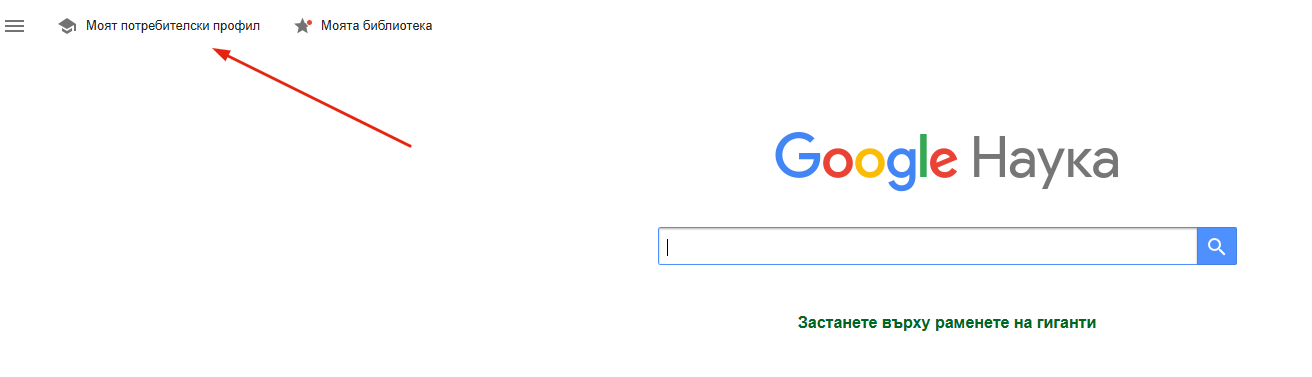
- Go to Google Scholar and log in to your account.
- In the upper left corner, select "My Profile".
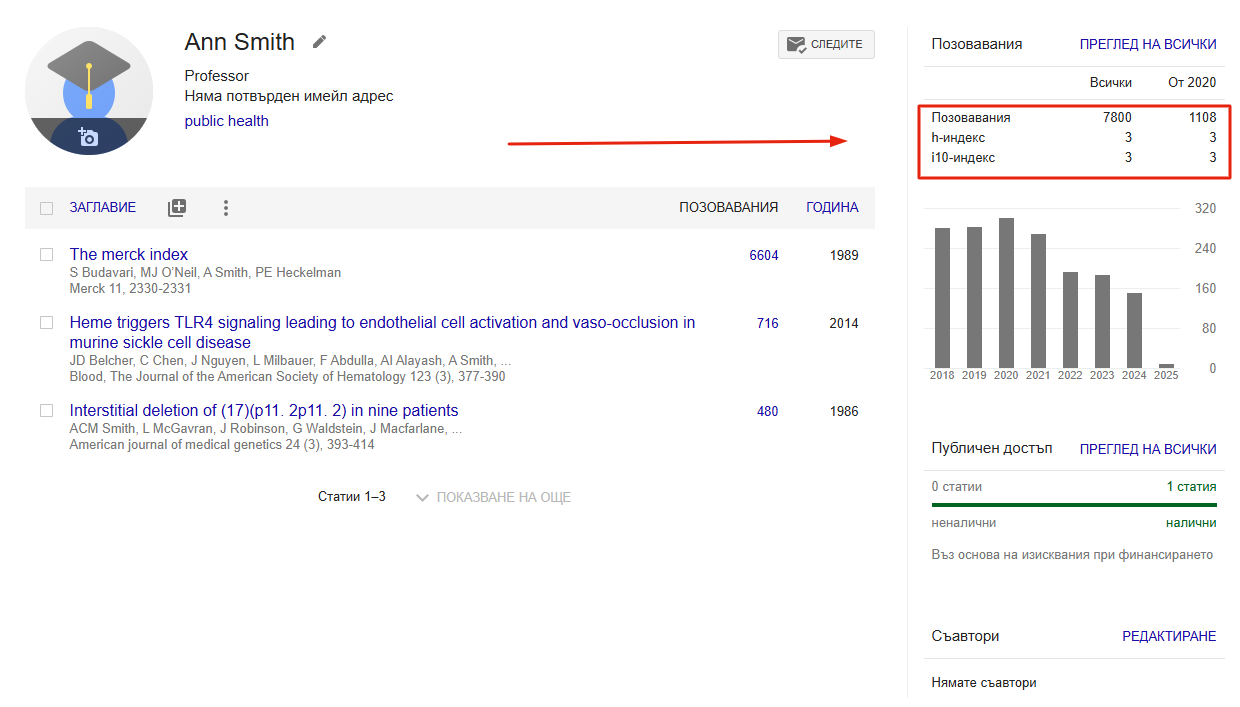
- Your author profile will display key scientometric indicators on the right side of the page:
- number of citations (callouts)
- h-index
- i10-index.
How is the h-index calculated in Google Scholar?
Unlike Scopus and Web of Science, which index only peer-reviewed scientific journals, Google Scholar analyzes the entire Internet in search of scientific content. As a result, the h-index calculated in Google Scholar is usually higher than in other scientometric databases.
Google Scholar indexes millions of scientific articles, preprints, books, and other sources, automatically calculating the h-index that appears in author profiles.
Google Scholar offers an author search feature that allows you to view the profiles of other researchers. However, these profiles can only be accessed by scholars who have made their profiles public.
How to increase the Hirsch index in Google Scholar?
1- Optimize your Google Scholar profile. Make sure all information about you and your scholarly activity is filled out correctly (name, affiliation, email, photo).
- Make sure that all your publications are included in your Google nauka profile. Check regularly to make sure that all your papers appear in your Google Scholar profile. You can add missing papers manually.
- Choose highly ranked journals for publication. Try to submit research papers to publications with a high impact factor or Citescore.
- Promote your work through specialized platforms. Regularly share your research with colleagues on social media for scientists - ResearchGate, Mendeley, Quora, and others.
- Write more co-authored scientific articles. Collaborating with scientists from other countries and fields of study increases the likelihood of being cited in Google Science.
- Publish review articles in your area of expertise. Reviews are more likely to be cited than other types of publications.
- Utilize maximum keywords in your Google Scholar author profile and your scholarly publications. Relevant keywords will help improve searchability in Google Scholar.
- Cite the work of colleagues who are writing on similar topics. Researchers may reciprocate and cite your work in return.
- Develop scientific networking. Participate in conferences, seminars, panel discussions to publicize your scientific work.
- Prioritize publishing in open access journals. Open Access publications provide broad access to your research, which helps increase citations and h-index on Google Science.
Is it possible to artificially increase the H-index in the Google Nauka?
There are several ways to artificially increase the H-index, but most of them are unethical and can lead to consequences for authors:
- Self-citation. Scholars may cite their own articles, but Google Scholar sometimes detects excessive self-citation and adjusts the H-index.
- Citation within scientific groups. Groups of scientists may systematically cite each other's work often without scientific validity, but this can negatively affect academic reputation later.
- Publication in unscrupulous journals. Some publications are ready to publish articles on any subject for a fee and artificially increase their citation rate. However, the reputation of such journals is often quite low.
- Data falsification. Creating fake articles, fictitious authors and artificial links is fraud and can seriously undermine a scientist's reputation in the Google Scholar scientific metrics system.
Organic increase of the Hirsch index in Google Наука
Organic h-index boosting is a strategy to increase citations without using artificial or unethical methods. The main strategies for organic h-index boosting include:
- publishing quality research
- optimization of titles and abstracts of scientific articles with relevant keywords
- active promotion of publications in specialized social networks
- cooperation with famous authors with high h-index.
Order organic h-index increase in Google Наука best from a proven scientific consulting company. Scientific Publications Consulting Company is a leader in the field of scientometrics and science. We have been providing unique and quality services to increase Hirsch Index in Google Scholar for more than 8 years. Leave your request if you need to increase Hirsch index in Google Scholar. We will generate a proposal specifically for you.