The procedure for obtaining a scientific degree or title in the field of natural sciences in Bulgaria is regulated by the Academic Personnel Development Act in the Republic of Bulgaria and the relevant regulations. The awarding of scientific degrees (Doctor, PhD) or titles (Principal Assistant, Associate Professor, Professor) is carried out on a competitive basis depending on the points scored. This article sets out in detail the minimum national eligibility requirements for degrees and titles in the natural sciences.
Which sciences are categorised as natural sciences in Bulgaria?
According to the Act on the Development of Academics in the Republic of Bulgaria the category of natural sciences includes:
- Physical Sciences
- Chemical Sciences
- Biological Sciences
- Mathematics
- Informatics and Computer Science.
How to obtain a degree or title in natural sciences?
The process of obtaining a degree/title in natural sciences in Bulgaria is strictly regulated. Candidates must not only prepare a high-quality thesis, successfully complete doctoral studies and pass examinations, but also confirm their scientific qualifications through scientific publications in authoritative databases such as Scopus and Web of Science, publication of monographs, publication of books, patents and inventions, as well as citations of the candidate's articles.
The awarding of scientific degrees and titles in Bulgaria is done on a competitive basis depending on the points scored by the applicants.
More details about the requirements and the procedure for awarding scientific degrees of "doctor" and "doctor of sciences" were described in our previous article.
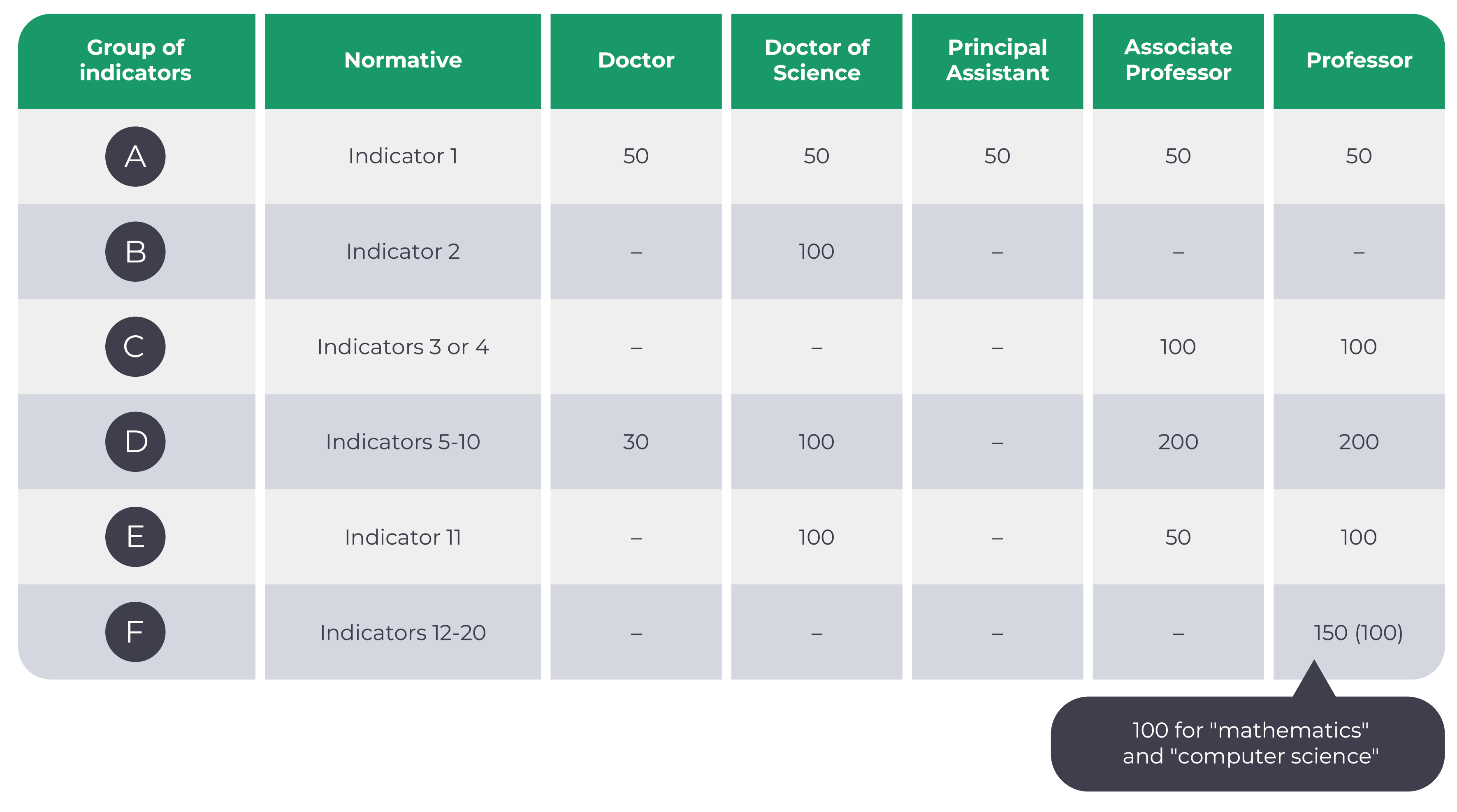
In the table below you can familiarise yourself with the required minimum points that a candidate for a scientific degree or title must score.
Minimum number of points required for science degrees and titles:
Number of points by indicators:
|
Group of indicators |
Indicator |
Number of points |
|
А |
1. Defence of a thesis for the scientific degree "Doctor" |
50 |
|
Б |
2. Defence of a dissertation for the scientific degree "Doctor of Sciences" |
100 |
|
В |
3. monograph on the dissertation for the scientific doctoral degree
OR
4. Doctoral thesis: Availability of scientific publications in journals peer-reviewed in the international databases Scopus or Web of Science. |
100 – for a monograph 25 – publication in the journal Q1; 20 – publication in the journal Q2; 15 – publication in the journal Q3; 12 – publication in the journal Q4 10 – publication in SJR edition without impact factor |
|
5. Publication of a monograph not submitted as a major thesis. |
30 |
|
|
6. Publication of a book based on a defended dissertation for the scientific degree of "doctor" or "doctor of sciences". |
20 |
|
|
Г |
||
|
7. Scientific publications in journals peer-reviewed in the international databases Scopus or Web of Science, written not on the basis of the thesis |
25 – publication in journal Q1; 20 – publication in the journal Q2; 15 – publication in the journal Q3; 12 – publication in the journal Q4 10 – publication in SJR without impact factor |
|
|
8. A published book chapter or co-authored monograph |
15 |
|
|
9. An invention, patent or utility model for which a protection document has been duly issued. |
25 |
|
|
10. Published patent or utility model application |
15 |
|
|
Д |
11. Citation in scientific publications, monographs, collective volumes and patents that are indexed in the international databases Web of Science or Scopus |
2 – citation in publications peer-reviewed by WoS or Scopus
1 – citation in non-peer-reviewed publications |
|
Е |
12. Obtaining the scientific degree "Doctor of Science". |
75 |
|
13. Scientific supervision of a successfully defended doctoral student (*n - number of co-supervisor of the corresponding doctoral student) |
50/*n |
|
|
14. Participation in a national scientific or educational project |
10 |
|
|
15. Participation in an international scientific or educational project |
20 |
|
|
16. Management of a national scientific or educational project |
20 |
|
|
|
17. Leading a Bulgarian group in an international scientific or educational project. |
50 |
|
18. Funds raised for scientific projects led by the candidate |
1 point for every 5000 Bulgarian leva. |
|
|
19. Published university or school textbook (*n - number of co-authors). |
40/n |
|
|
20. Published university textbook or school textbook (*n - number of co-authors). |
20/n |
Q1, Q2, Q3 and Q4 – quartile of the journal in Scopus or Web of Science, which reflects the level of scientific publication in comparison with other journals in the same subject area. The quartile is determined on the basis of impact factor (IF) and is provided in Journal Citation Reports (Web of Science) and Scimago Journal Rank (Scopus).
More about journal quartiles in our article "Journal Quartiles: what do Q1, Q2, Q3 and Q4 mean? "
When indicating a journal publication belonging to multiple scientific fields in the Web of Science database, the highest quartile of the journal for the year of publication is taken into account.
Points for co-authored articles are distributed among all authors. If there are more than 30 co-authors, the candidate must prove his/her significant contribution to the work. This can be demonstrated in one of the following ways:
- the candidate is listed as first author
- is listed as corresponding author
- the candidate has provided a letter from the corresponding author or scientific project leader confirming his/her contribution to the scientific work.
The existence of such evidence is verified as part of the candidate's compliance with the minimum national requirements.
Achieve your scientific goals with Scientific Publications! Entrust publishing a scientific article in Scopus or Web of Science to professionals and get guaranteed indexing of your research in the international database. Leave an application right now and get free consultation of our experts!