The procedure for awarding academic degrees and titles in the arts is regulated by the Academic Staff Development Act in the Republic of Bulgaria, as well as a number of related regulations. Degrees and titles are awarded on a competitive basis, with the key criterion being the number of points achieved. This article details the minimum national requirements that candidates for degrees and titles in the arts must fulfil.

Which academic fields in Bulgaria belong to the field of arts?
According to the Academic Development Act in the Republic of Bulgaria, the following areas belong to the field of arts:
- Art Theory
- Fine Arts
- Musical and dance arts
- Theatre and film arts.
How to obtain a scientific degree or academic title in the arts?
The main normative act regulating the awarding of scientific degrees and academic titles in Bulgaria is the Law on the Development of Academic Personnel in the Republic of Bulgaria. This law entered into force in 2010 and has been updated several times since then, including the latest amendments of 18 March 2025. The document establishes both general provisions and minimum national requirements for various scientific fields, including the arts.
In order to obtain a scientific doctoral degree, it is necessary to complete doctoral studies, pass compulsory examinations and successfully defend a thesis. In addition, the applicant must confirm his/her scientific qualification through additional academic achievements, such as publications in international databases (Scopus, Web of Science), publication of monographs and scientific books, registration of patents and copyrights, as well as a high citation index (H-index).
The awarding of scientific degrees (doctor, doctor of sciences) and academic title (principal assistant, associate professor, professor) is carried out on a competitive basis. Candidates are evaluated according to a point system: the higher the number of points received for scientific achievements, the higher the chances for successful defence of the thesis and the awarding of the corresponding degree or rank.
In the previous article we have examined in detail the requirements and procedure for awarding the scientific degrees "Doctor" and "Doctor of Science" in Bulgaria.
The table below summarises the minimum points required to obtain a scientific degree or academic title in the arts.
Minimum number of points required for scientific degrees and academic titles in the arts
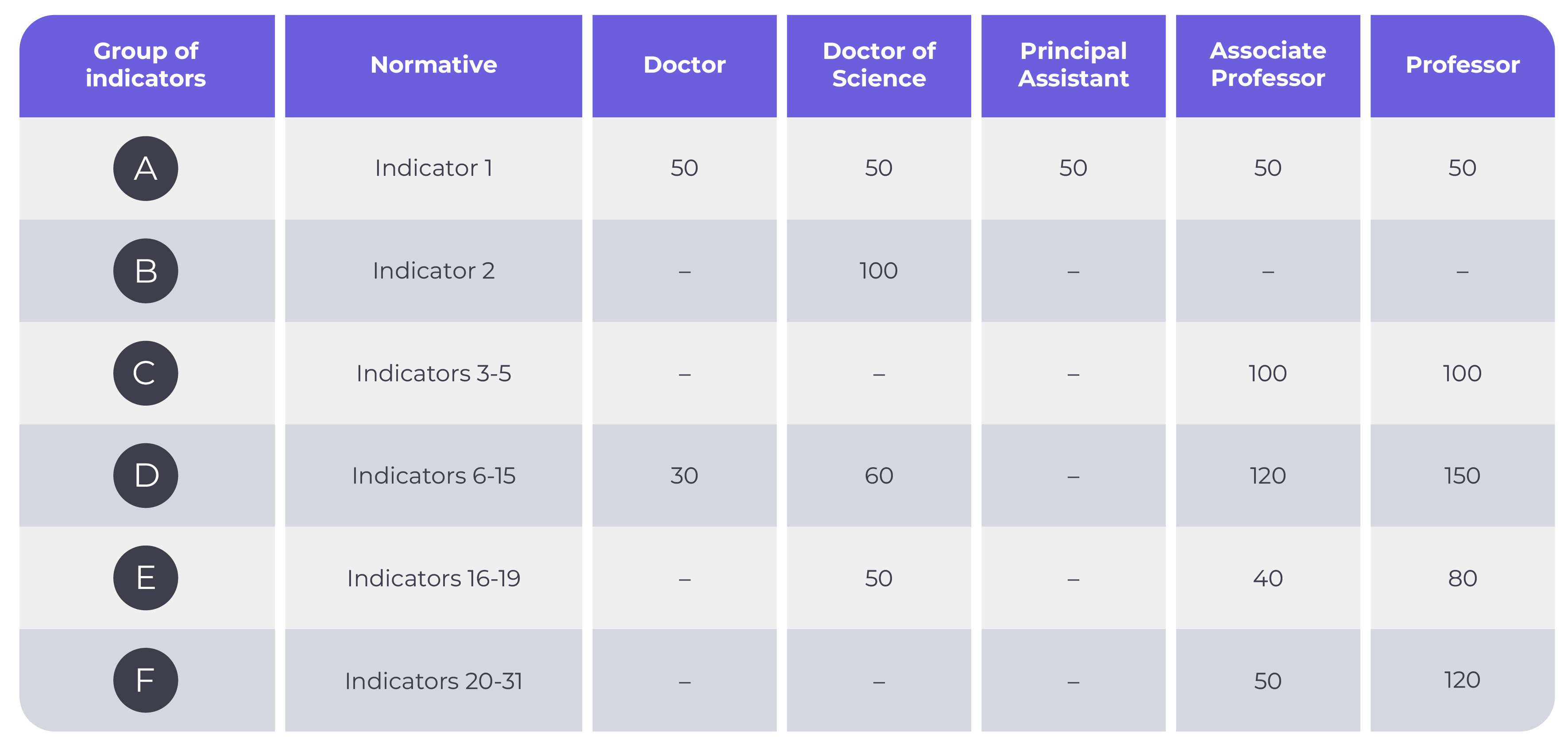
Number of points by indicators:
|
Group of indicators |
Indicator |
Number of points |
|
А |
1. Defence of a thesis for the scientific degree of "doctor". |
50 |
|
B |
2. Defence of a dissertation for the scientific degree "doctor of sciences". |
100 |
|
C |
3. Monograph on a dissertation in the relevant scientific field for a scientific doctoral degree. |
100 |
|
4. An author's project implemented in the field of arts (film, performance, exhibition, concert, etc.). |
50 |
|
|
5. Leading (independent) creative activity in the arts. |
35 |
|
|
D |
6. Publication of a monograph not submitted as a major thesis. |
100 |
|
7. Publication of a book based on a defended dissertation for the scientific degree of "doctor" or "doctor of sciences". |
75 |
|
|
8. Scientific publications in journals reviewed in the international databases Scopus or Web of Science (*n - number of co-authors). |
30/n |
|
|
9. Scientific articles published in specialised publications in the field of arts. (*n - number of co-authors). |
15/n |
|
|
10. Studies published and cited in scientific journals indexed in Scopus or Web of Science (*n - number of co-authors). |
45/n |
|
|
11. Research published in specialised publications in the field of arts. (*n - number of co-authors). |
30/n |
|
|
12. Realisation of a small original work of art (*n - number of co-authors). |
30/n |
|
|
13. Lead (or independent) creative work in the arts not submitted as a major thesis. |
35 |
|
|
14. Additional creative achievement or participation in the creation of a collective work in the field of arts. |
10 |
|
|
15. Published chapter in a collective monograph (*n - number of co-authors). |
20/n |
|
|
E |
16. Citation in scientific publications that are indexed in international databases Scopus/Web of Science or in monographs and collective collections. |
15 |
|
17. Citation in monographs and peer-reviewed collective collections. |
10 |
|
|
18. Citation in non-peer-reviewed scholarly journals. |
5 |
|
|
19. Reviews of realised author's works or creative works published in specialised publications in the field of arts. |
10 |
|
|
F
|
20. Obtaining the scientific degree "Doctor of Science". |
40 |
|
21. Scientific supervision of a successfully defended doctoral student (*n - number of co-supervisor of the corresponding doctoral student). |
40/n |
|
|
22. Participation in a national scientific, educational or artistic project. |
15 |
|
|
23. Participation in an international scientific, educational or artistic project. |
20 |
|
|
24. Directing a national scientific, educational or artistic project. |
30 |
|
|
25. Directing an international scientific, educational or artistic project. |
40 |
|
|
26. Published university or school textbook (*n - number of co-authors). |
40/n |
|
|
27. Published university textbook or school textbook (*n - number of co-authors). |
20/n |
|
|
28. Conducting a master class, organising a studio or workshop in the field of arts. |
20 |
|
|
29. Creative participation in a masterclass, studio or workshop in the arts. |
5 |
|
|
30. Awards won at creative and performing arts competitions by national professional organisations and forums. |
10 |
|
|
31. Awards received at creative and performing arts competitions awarded by professional forums and organisations abroad. |
20 |
|
Planning to get a scientific degree or scientific title in Bulgaria? Publishing in Scopus or Web of Science is an important step on this path.
The company "Scientific Publications" has been helping scientists since 2016 to successfully pass the way from choosing a topic for an article to its publication in an international scientometric database. We provide full support – from the selection of authoritative journals to the process of article indexing. Fill out the form below and get free expert advice!