For every scientist and researcher, publishing their own research in such well-known databases as Scopus and Web of Science plays an important role in their work. What are these publications for? Why are such publications important?

For researchers and scientists, publishing their own research is not only a desire but also a necessity. To conduct both teaching and research activities, the availability of publications in Scopus and Web of Science is prescribed by law. Scopus and Web of Science are one of the largest and most authoritative databases that index thousands of scientific publications, research materials and authors. Publications in these databases contribute to the recognition of scientific achievements, enhancement of academic reputation, and expansion of opportunities for cooperation with other researchers and institutions.
Who needs to publish in Scopus and Web of Science?
Publishing research papers in journals indexed in Scopus and Web of Science is an important step for those who have decided to connect their lives with research and/or teaching. It can guarantee an increase in reputation, promote professional development, and open up new career prospects. Scopus and Web of Science are among the most reputable databases, so publications in journals indexed in these databases add weight to scientific achievements and promote their dissemination in the global scientific community.
Publications in Scopus and Web of Science are required for candidates for academic degrees and academic titles.
Such requirements are prescribed and enshrined in the Bulgarian legislation, as well as in the conditions for holding academic positions at the Bulgarian Academy of Sciences.
The regulations specify a certain number of points for each academic title and degree. The points in the context of academic titles and degrees are used to assess the academic achievements of researchers. These points help to objectively assess the contribution of a researcher in their field and determine their qualifications for the relevant title or degree.
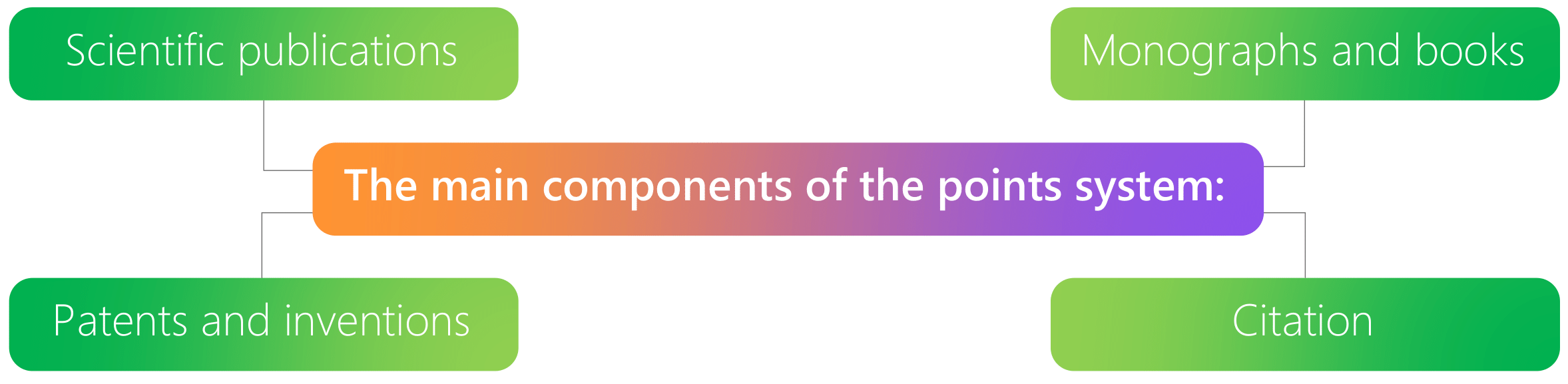
Regulatory documents contain indicators that determine the number of points required to obtain academic titles and degrees. These indicators take into account various aspects of academic activity, such as publications, monographs, patents, etc.
Required number of points for academic degrees and academic titles
Academic titles
1. Principal Assistant:
- Minimum required points: 50;
- No requirements for academic degrees or publications.
2. Associate Professor:
- Minimum required points: 50 + 220 + 60;
- Publications in journals that are refereed and indexed in world-renowned scientific information databases (Web of Science and Scopus).
3. Professor:
- Minimum required points: 50 + 220 + 120 + 150;
- Publications in journals that are refereed and indexed in world-famous scientific information databases (Web of Science and Scopus).
Academic degrees
1. Doctor:
- Minimum required points: 50.
2. Doctor of Sciences:
- Minimum required points: 50 + 100 + 100 + 100 + 100;
- Dissertation for the degree of Doctor of Science;
- Publications in journals that are refereed and indexed in world-renowned scientific information databases (Web of Science and Scopus).
What are the points for?
- Qualification assessment. Points are used to determine whether a researcher meets the requirements for a particular academic degree or academic title.
- Objectivity. The use of the points system helps to avoid subjectivity in the assessment of scientific achievements.
- Motivation. The points system encourages researchers to actively publish, participate in research projects, develop new technologies, and obtain patents.
Scientists and researchers receive a certain number of points for publications in the Scopus and Web of Science databases.
| Number of points | Journal |
| 25 | Q1 |
| 20 | Q2 |
| 15 | Q3 |
| 12 | Q4 |
| 10 | Publication in SJR without an impact factor |
Citation in scientific journals
2 points for citations in scientific journals, monographs, collective collections and patents indexed in Web of Science and Scopus.
Scientific organisations, commissions, assessors
To become members of scientific expert commissions, appraisers or super-appraisers, there are requirements for the number of scientific publications and citations in scientific journals. In addition, Bulgaria has the Scientific Research Foundation, and members of the board and executive board must meet certain criteria.
Minimum requirements for members of the Executive Board by scientific field
| Sciences | Number of publications |
| Biological/medical sciences | 20 scientific publications, including at least 15 scientific articles in journals with IF, HI 7. |
| Mathematical sciences and computer science | 15 scientific publications:
|
| Earth Sciences | 20 scientific publications, including at least 10 scientific articles in journals with IF, HI 5. |
| Social sciences | 1 monograph, 20 scientific publications, 30 citations. |
| Agricultural and technical sciences | 20 scientific publications, including at least 10 scientific articles in peer-reviewed journals, 20 citations. |
| Physical sciences | 20 scientific publications, including at least 15 scientific articles in IF journals, citations 6. |
|
Chemical sciences |
20 scientific publications, including at least 15 scientific articles in journals with IF, HI 7. |
| Humanities | 1 monograph, 20 scientific publications, 30 citations. |
*IF – impact factor; HI – Hirsch index.
The requirements listed in the table cover the entire period of a scientist's activity. In addition, it is mandatory to have at least 10 scientific publications in the last 5 years.
Minimum requirements for members of scientific and expert commissions and special evaluators in scientific fields
| Sciences | Number of publications |
| Biological/medical sciences | 20 scientific publications, including at least 15 scientific articles in journals with IF, HI 7. |
| Mathematical sciences and computer science | 15 scientific publications:
|
| Earth Sciences | 20 scientific publications, including at least 10 scientific articles in journals with IF, HI 5. |
| Social sciences | 1 monograph, 20 scientific publications, 30 citations. |
| Agricultural and technical sciences | 20 scientific publications, including at least 10 scientific articles in peer-reviewed journals, 20 citations. |
| Physical sciences | 20 scientific publications, including at least 15 scientific articles in IF journals, citations 6. |
| Chemical sciences | 20 scientific publications, including at least 15 scientific articles in journals with IF, HI 7. |
| Humanities | 1 monograph, 20 scientific publications, 30 citations. |
The requirements listed in the table cover the entire period of a scientist's activity. For scientists, a prerequisite is the availability of at least 5 scientific publications over the past 5 years.
Minimum requirements for evaluators in scientific fields
| Sciences | Number of publications |
| Biological sciences | 15 scientific publications, including at least 10 scientific articles in journals with IF, HI 5. |
| Mathematical sciences and computer science | 10 scientific publications:
|
| Medical sciences | 15 scientific publications, including at least 10 scientific articles in journals with IF, HI 5. Clinical and dental medicine – at least 15 scientific publications, including at least 8 scientific articles in journals with IF, HI 4. |
| Earth sciences | 15 scientific publications, including at least 8 scientific articles in journals with IF, ІХ 4. |
| Social sciences | 1 monograph or 15 scientific publications, 15 citations. |
| Agricultural and technical sciences | 15 scientific publications, including at least 8 scientific articles in peer-reviewed journals, 10 citations. |
| Physical sciences | 15 scientific publications, including at least 10 scientific articles in IF journals, IF 4. |
| Chemical sciences | 15 scientific publications, including at least 10 scientific articles in journals with IF, HI 5. |
| Humanities | 1 monograph or 15 scientific publications, 15 citations. |
The requirements listed in the table cover the entire period of the scientist's activity. A prerequisite is the availability of at least 5 scientific publications in the last 5 years.
What are the benefits of publishing in Scopus and Web of Science?
- Increased visibility, authority and influence in the scientific community.
- Opportunities for international cooperation.
- Increased chances of receiving grants and other types of funding.
- Opportunities for career development.
- Increased competitiveness.
- Participation in international scientific events.
This list is not exhaustive, but it already shows that publications in the Scopus and Web of Science databases have numerous advantages and open up many opportunities for researchers.
If you need to publish in Scopus and Web of Science, please contact Scientific Publications. Our specialists have been providing high-quality and highly qualified services for almost 8 years. With us, you get a guaranteed publication. Together to new scientific achievements!