Many researchers face a choice: should they publish in conference proceedings or in an international journal indexed in the Scopus database? How can they avoid making a mistake and make the right decision? Vladyslav Romanenko, Director of the Scientific Publications company, explains this in detail in his new article.
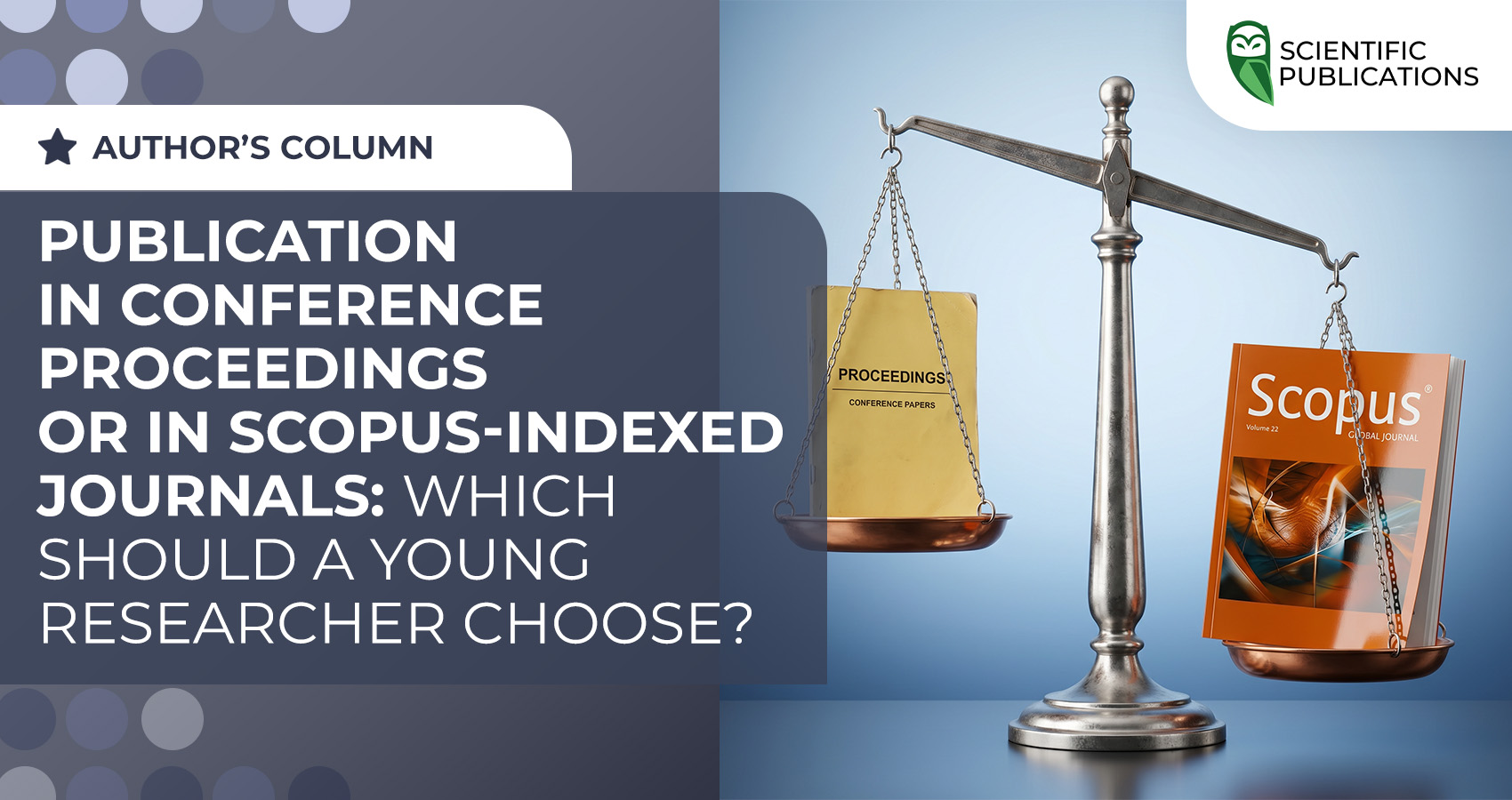
Recently, while analysing researchers' enquiries, it has been observed that PhD students frequently seek assistance with publishing articles in conference proceedings. As this publication format has both advantages and disadvantages, I would like to examine it in greater detail. For a better understanding, it is worth comparing publication in conference proceedings with publication in international journals indexed in Scopus.
First of all, it is important to understand that publishing the results of one's research is an essential part of every researcher's academic activity, whether a doctoral candidate or a professor. Each such publication is awarded rating points in accordance with the field of science and the internal regulations of the university. Therefore, the higher the quality of the journal in which a researcher publishes, the more rating points they receive.
Conference proceedings generally publish preliminary research findings, whereas an article published in Scopus represents a complete outcome of a researcher's scientific work.
At first glance, it may seem preferable to publish in conference proceedings, as the peer review requirements are considerably less stringent or may even be absent altogether, and the paper itself may range from 5 to 10 pages in length. Moreover, such publications are significantly less expensive than articles published in prestigious international journals. However, when being admitted to a dissertation defence, not only the number of publications but also their quality is taken into account. For example, any scientific journal included in an international database will be considerably more prestigious than a local conference.
Is it worth publishing in Scopus-indexed conference proceedings?
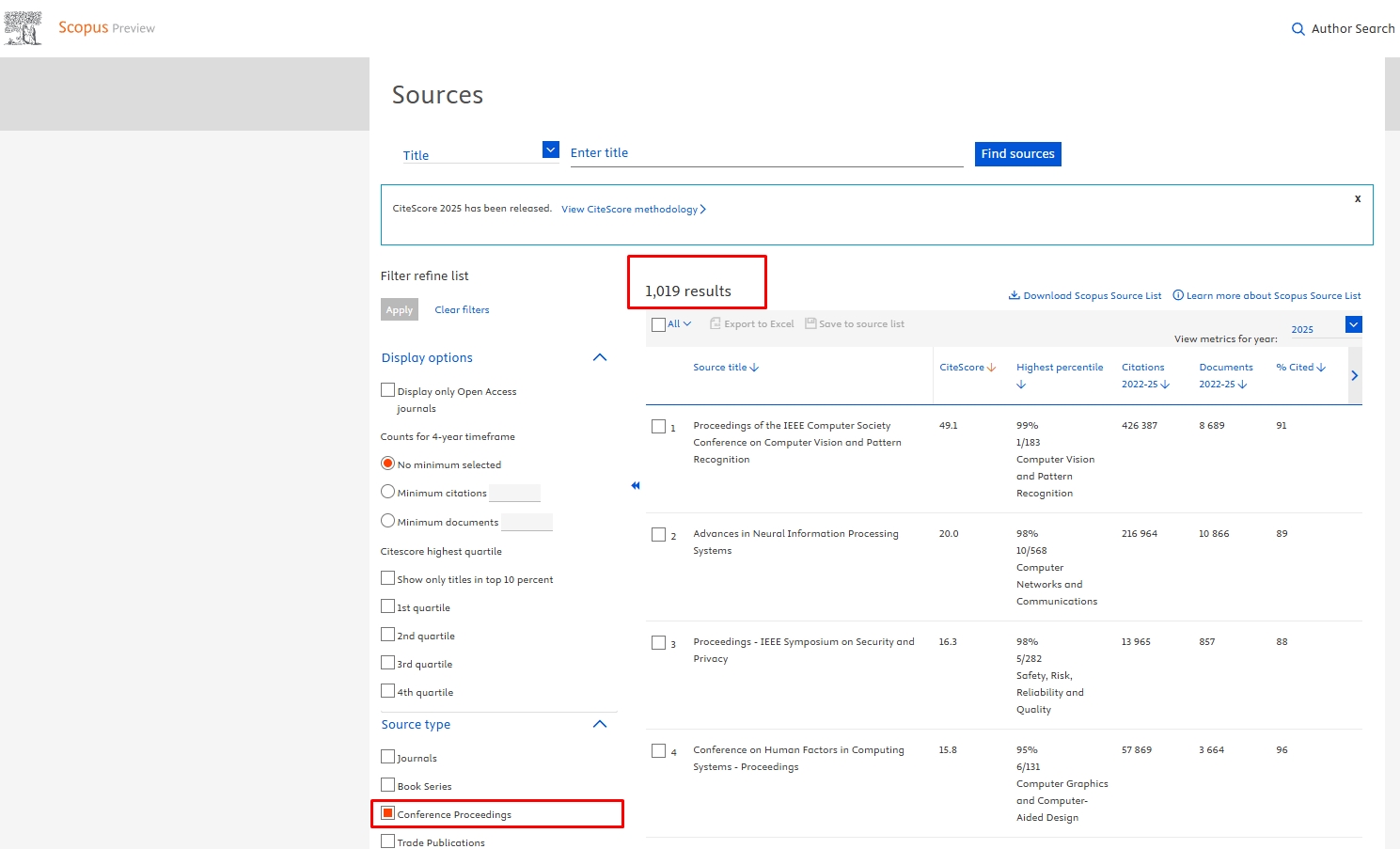
It may seem that the ideal option is to publish research findings in conference proceedings indexed in Scopus. However, a more detailed analysis shows that of the nearly 50,000 sources included in this database, only around one thousand publish conference proceedings. Consequently, the number of submitted papers exceeds by far the publication capacity of these proceedings.
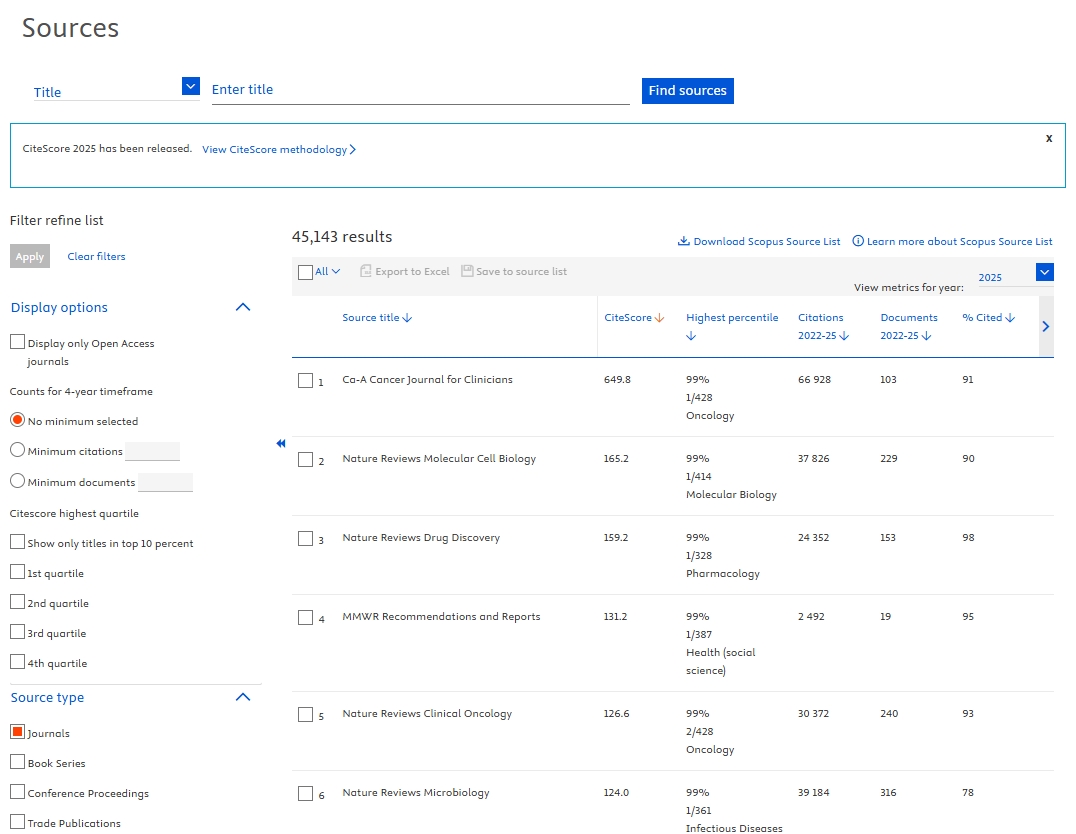
At the same time, if we consider journals indexed in Scopus, there are approximately 45,000 of them, which significantly increases the chances of finding a suitable journal for your research field.
Researchers who already have experience publishing in international journals know that, for further academic career development, it is important not only to have publications but also to ensure that they are actively cited. Publishing research findings in Scopus significantly increases the likelihood that other researchers will cite them, which, in turn, contributes to faster academic career advancement, including obtaining positions such as Associate Professor or Professor.
When it comes to conference proceedings, in the best-case scenario, publication details will be displayed in a Google Scholar profile, where citations are not considered as prestigious and are not always recognised by universities.
At the same time, having publications indexed in the Scopus database indicates that the author has undergone a rigorous evaluation by independent reviewers, which, in turn, increases confidence in the research findings.
Another less obvious but significant advantage of publishing in Scopus compared with conference proceedings is increased competitiveness when applying for research funding. When applications for European and national grants are assessed, publications in such journals are regarded as an indicator of the scientific maturity of both the researcher and the research group. Consequently, it becomes possible not only to cover part of the publication costs through external funding but also to gain the opportunity to apply for grants that support the further development of research.
Which publication format should you prefer?
Ultimately, although publication in the proceedings of an international conference makes it possible to present research findings quickly and obtain the minimum number of rating points required for admission to a dissertation defence, articles published in international journals indexed in Scopus provide a significantly greater academic impact.
For researchers in Bulgaria, such publications carry greater weight during academic evaluation, contribute to the growth of citation indicators and university rankings, increase the international visibility of research, and help build a stronger academic reputation.
Therefore, from the perspective of long-term academic career development, publishing in Scopus-indexed journals is a considerably more beneficial and prestigious option.
Need assistance with publishing in Scopus? Submit a request, and our experts will contact you to provide a free consultation. We support the publication process at every stage – from preparing and structuring the manuscript to monitoring publication and indexing in the database.