Obtaining a scientific degree or scientific title in Bulgaria is a strictly regulated and competitive procedure. This article discusses the minimum national requirements for applicants for scientific degrees and titles in the field of Earth Sciences, based on the provisions of the Academic Personnel Development Act in the Republic of Bulgaria and relevant regulations.
How to obtain a scientific degree or scientific title in the field of Earth Sciences?
According to the Academic Personnel Development Act in the Republic of Bulgaria, the direction "Earth Sciences" belongs to the field of natural sciences. However, by the decision of the Supreme Administrative Court No. 8442 of 22 August 2023, and in connection with the subsequent changes approved by Decision No. 23 of 2025, it was decided to separate the professional direction "Earth Sciences" into a separate category. This entailed the establishment of new, specific evaluation criteria, as well as the definition of the minimum required scores for the groups of indicators for the awarding of various degrees and academic appointments.
The procedure for awarding scientific degrees (Doctor, Doctor of Science) and academic titles (Principal Assistant, Associate Professor, Professor) in the field of Earth Sciences in Bulgaria is strictly regulated by legislation and is carried out according to established criteria. Candidates need not only to prepare and successfully defend a thesis, undergo doctoral studies and pass the relevant examinations, but also to prove their academic qualifications through the results of their research activities.
Such academic achievements include publications in peer-reviewed publications indexed in authoritative databases such as Scopus and Web of Science, publication of scientific monographs, books, patents and registered inventions, as well as the number of citations of the applicant's scientific works.
Awarding of scientific degrees and scientific titles is carried out on a competitive basis, taking into account the sum of points scored by the candidate on various indicators of scientific activity.
In the previous material we have considered National requirements for obtaining a scientific degree in natural sciences.
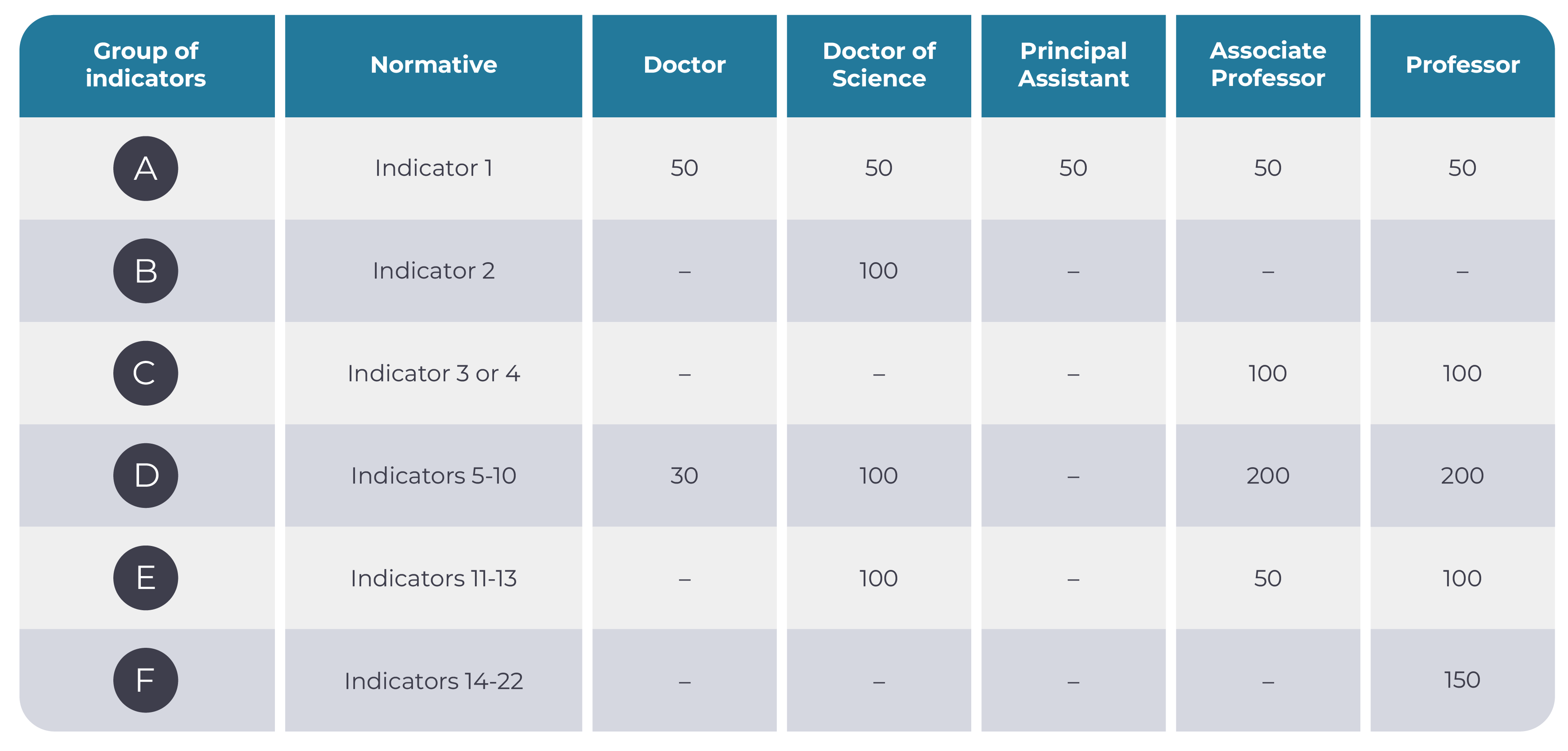
The table below summarises the mandatory minimum points that a candidate needs to achieve to qualify for a relevant science degree or academic position.
Minimum number of points required for degrees and titles in Earth Sciences:
Number of points by indicators:
|
Group of indicators |
Indicator |
Number of points |
|
А |
1. Defence of a thesis for the scientific degree of "doctor". |
50 |
|
B |
2. Defence of a dissertation for the scientific degree "Doctor of Sciences". |
100 |
|
C |
3. Monograph on the dissertation for the degree of scientific doctor of sciences. |
100 |
|
4. Doctoral thesis: Availability of scientific publications in journals peer-reviewed in the international databases Scopus or Web of Science. |
25 – publication in the journal Q1; 20 – publication in the journal Q2; 15 – publication in the journal Q3; 12 – publication in the journal Q4 10 – publication in an SJR journal without impact factor 8 – publication in Web of Science/Scopus journal not included in SJR and without impact factor 6 – for other publications |
|
|
D |
5. Publication of a monograph not submitted as a major thesis. |
100 |
|
6. Publication of a book based on a defended dissertation for the scientific degree of "doctor" or "doctor of sciences". |
20 |
|
|
7. Scientific publications in journals reviewed in the international databases Scopus or Web of Science (*n - number of co-authors). |
25 – publication in the journal Q1; 20 – publication in the journal Q2; 15 – publication in the journal Q3; 12 – publication in the journal Q4 10 – publication in an SJR journal without impact factor 8 – publication in Web of Science/Scopus journal not included in SJR and without impact factor 6 – for other publications |
|
|
8. Published research or a chapter in a collective monograph. |
15 |
|
|
9. An invention, patent or utility model for which a protection document has been officially issued in accordance with the established procedure. |
25 |
|
|
10. Published patent or utility model application. |
15
|
|
|
E
|
11. Citation in scientific publications that are indexed in international databases Scopus/Web of Science or in monographs and collective collections. |
5 |
|
12. Citation in monographs and peer-reviewed collective collections. |
3 |
|
|
13. Citation in non-peer-reviewed scientific journals. |
2 |
|
|
F
|
14. Obtaining the scientific degree "Doctor of Science". |
75 |
|
15. Scientific supervision of a successfully defended doctoral student (*n - number of co-supervisor of the corresponding doctoral student). |
50/n |
|
|
16. Participation in a national scientific or educational project. |
10 |
|
|
17. Participation in an international scientific or educational project. |
20 |
|
|
18. Directing a national research or educational project. |
20 |
|
|
19. Management of an international scientific or educational project. |
50 |
|
|
20. Funds raised for research projects led by the candidate. |
1 point for every 5000 leva |
|
|
21. Published university or school textbook (*n - number of co-authors). |
40/n |
|
|
22. Published university textbook or school textbook (*n - number of co-authors). |
20/n |
Q1, Q2, Q3 and Q4 are quartile categories of journals in the international databases Scopus and Web of Science, reflecting their ranking in comparison with other publications in the same subject area. The quartile is determined on the basis of Impact Factor or similar indicators and is indicated in Journal Citation Reports (for Web of Science) and Scimago Journal Rank (for Scopus).
For more information about journal quartiles, see our article "Journal Quartiles: what do Q1, Q2, Q3, and Q4 mean?"
When specifying a journal publication across multiple scientific fields in Scopus/Web of Science, the higher quartile of the journal for the year of publication is taken into account.
Achieve your scientific goals with Scientific Publications! Entrust publishing a scientific article in Scopus or Web of Science to professionals and get guaranteed indexing of your research in the international database. Leave an application right now and get free consultation of our experts!